
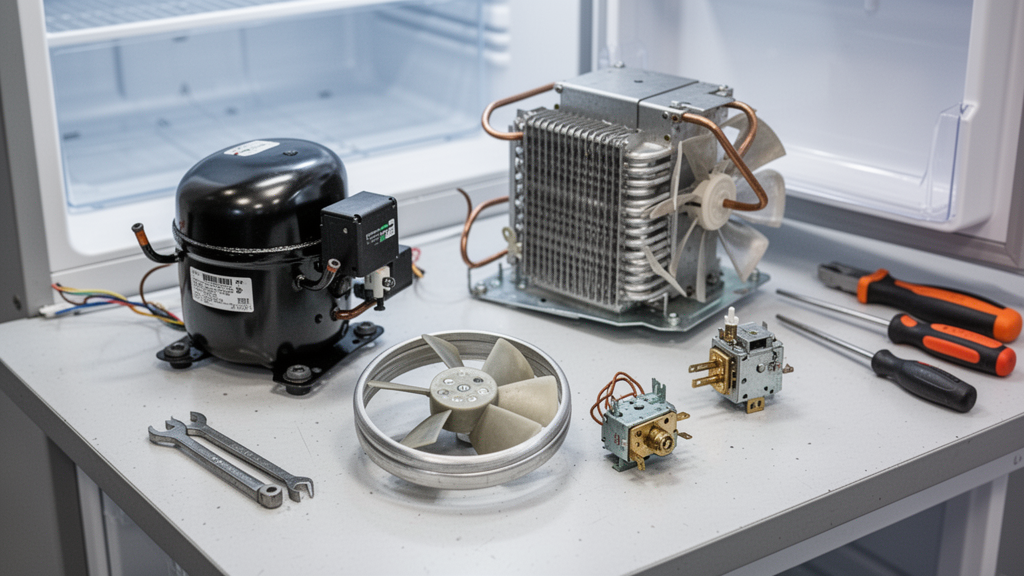
Top 10 Refrigerator Parts That Fail Most Often (And How to Fix Them)
Know Your Refrigerator's Weak Points
Your refrigerator runs 24 hours a day, 365 days a year. With that kind of workload, it's no surprise that certain parts wear out over time. Knowing which components fail most often can help you diagnose problems faster and save money on repairs. Here are the top 10 refrigerator parts that fail most frequently.
1. Evaporator Fan Motor
The evaporator fan circulates cold air throughout the refrigerator and freezer compartments. When it fails, you'll notice the freezer is cold but the refrigerator section is warm. You may also hear unusual buzzing or clicking sounds. Replacement cost: $15-$50 for the part.
2. Condenser Fan Motor
Located near the compressor at the bottom or back of the fridge, the condenser fan helps dissipate heat. When it fails, the compressor overheats and the fridge stops cooling efficiently. Check for debris around the fan first — sometimes it's just blocked by dust or pet hair.
3. Start Relay
The start relay helps the compressor start up. A faulty start relay causes a clicking sound every few minutes as the compressor tries and fails to start. This inexpensive part ($10-$20) is one of the easiest refrigerator repairs you can do yourself.
4. Defrost Thermostat
The defrost thermostat monitors the evaporator coil temperature and turns on the defrost heater when frost builds up. When it fails, frost accumulates on the coils, reducing cooling efficiency. You'll often notice ice buildup on the back wall of the freezer.
5. Defrost Heater
Working with the defrost thermostat, the defrost heater melts frost from the evaporator coils. Symptoms of failure include frost buildup, poor cooling in the fresh food section, and water leaking onto the floor.
6. Defrost Timer / Control Board
Older refrigerators use a mechanical defrost timer, while newer models use an electronic defrost control board. Both serve the same purpose — initiating the defrost cycle at regular intervals. Failure results in excessive frost buildup.
7. Door Gasket
The rubber seal around your refrigerator door keeps cold air in and warm air out. Over time, gaskets crack, tear, or lose their magnetic seal. A compromised gasket makes the compressor work harder, increases energy bills, and can cause condensation or frost issues.
Quick test: Close the door on a dollar bill. If you can pull it out easily, the gasket needs replacing.
8. Water Inlet Valve
If your fridge has an ice maker or water dispenser, the water inlet valve controls water flow. When it fails, you may get no ice, no water, or water leaking under the fridge. These valves typically last 5-8 years.
9. Thermostat (Temperature Control)
The thermostat directs voltage to the compressor and fan motors based on the temperature you set. A failed thermostat can cause the fridge to run continuously, not run at all, or not maintain the correct temperature.
10. Compressor
The compressor is the heart of your refrigerator's cooling system. While compressors are built to last, they can fail after 10-15 years. Symptoms include the fridge not cooling at all, running constantly, or making loud humming/clicking noises. Compressor replacement is expensive ($200-$500+ for parts and labor), so it's often worth comparing the cost against buying a new refrigerator.
Save Money on Refrigerator Parts
Most of these parts are affordable and can be replaced by handy homeowners with basic tools. Search your refrigerator's model number at PartsDiscount.com to find the exact replacement part with fast shipping.