
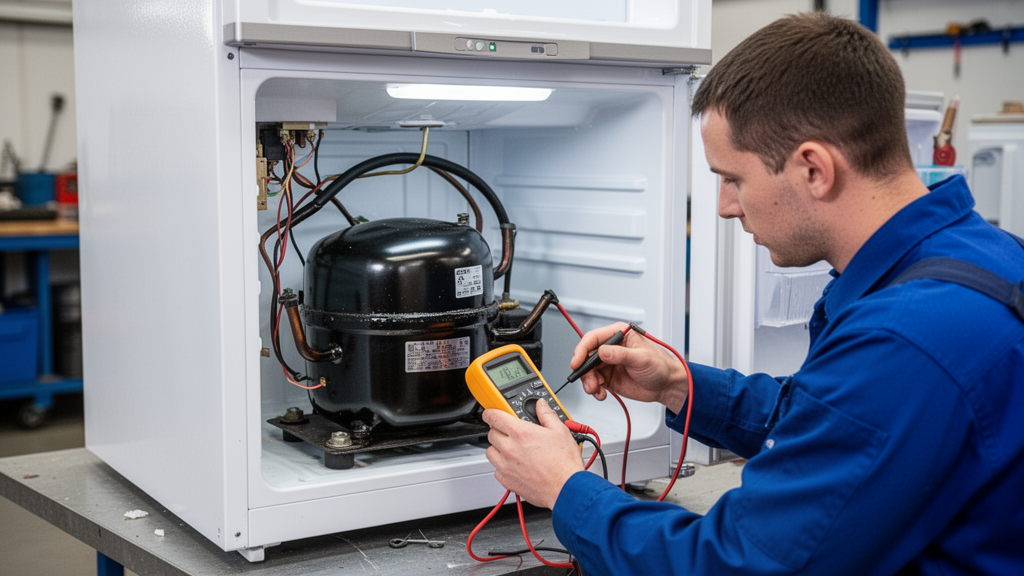
5 Warning Signs Your Refrigerator Compressor Is Failing
What Does the Refrigerator Compressor Do?
The compressor is the heart of your refrigerator's cooling system. It compresses refrigerant gas and circulates it through the condenser and evaporator coils, which is what actually keeps your food cold. When the compressor starts to fail, you'll notice a gradual decline in cooling performance before it eventually stops working altogether.
The 5 Warning Signs
1. The Fridge Is Running Constantly
A healthy compressor cycles on and off throughout the day to maintain the set temperature. If you notice your refrigerator running non-stop, the compressor may be struggling to maintain pressure and compensating by running continuously. This also drives up your electricity bill significantly.
What to check first: Before blaming the compressor, make sure the condenser coils are clean (dusty coils force the compressor to work harder), the door gaskets seal properly, and the temperature is set correctly (37°F for the fridge, 0°F for the freezer).
2. Clicking or Buzzing Sounds
A failing compressor often produces repeated clicking sounds as the start relay tries to kick the compressor on, but it fails to start. You may also hear a loud buzzing or humming that lasts a few seconds before clicking off. This on-off-on-off pattern is a classic sign of compressor trouble.
3. The Fridge Isn't Cold Enough
If your refrigerator temperature is creeping up even though the compressor is running, it may not be compressing the refrigerant effectively. Check with a thermometer — the fridge should be at or below 40°F and the freezer at 0°F.
4. The Compressor Is Unusually Hot
The compressor will be warm to the touch during normal operation, but if it's too hot to keep your hand on it, that's a problem. Overheating can be caused by a failing compressor, dirty condenser coils, or a faulty condenser fan.
5. The Compressor Shuts Off Early
If the compressor kicks on but shuts off after just a few seconds or minutes (and the fridge hasn't reached temperature), the compressor's internal overload protector may be tripping due to overheating or an electrical fault within the compressor itself.
Should You Repair or Replace?
Compressor replacement is one of the most expensive refrigerator repairs — typically $200-$500 for parts and labor. Consider these factors:
- Age of the fridge: If it's over 10-12 years old, replacement may be more economical
- Cost of a new fridge: Compare the repair cost to 30-50% of a new refrigerator's price
- Warranty: Some compressors have manufacturer warranties of 5-10 years
- Energy efficiency: Newer models are significantly more energy-efficient
What You Can Fix Yourself
While compressor replacement is a job for a professional (it involves handling refrigerant), many compressor-related issues are actually caused by simpler, DIY-fixable parts:
- Start relay: $10-$20, easy swap
- Condenser fan motor: $15-$40
- Dirty condenser coils: Free (just vacuum them)
- Overload protector: $10-$25
Find Refrigerator Parts
Search your refrigerator's model number at PartsDiscount.com to find start relays, fan motors, and other compressor-related parts at great prices.