
Whirlpool WTW5200VQ2 Won't Start Except in Spin – What Part Fixes This?
Need the replacement part? Search your model number at for guaranteed fit and fast free shipping.
Understanding the Problem
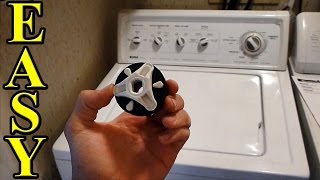
Brief explanation: If your Whirlpool WTW5200VQ2 only starts when you pull the start knob in the SPIN position but will not start in any other cycle (wash/agitate/fill), that means the motor, lid switch and basic start circuit are capable of running (because spin runs) but the washer is not getting the correct control signals or torque to begin agitating or running the selected wash cycles. The most common sources are a faulty timer/control board or timer contacts, a bad start switch or timer start contact, a wiring/harness fault, or a motor-start/capacitor/drive issue that only manifests under the higher-torque demands of agitate. Follow the steps below in order — they go from simplest to more advanced — to isolate and fix the problem. Step-by-step diagnostic and repair steps: 1) Safety first - Unplug the washer or turn off its breaker before you inspect or remove panels. Water + electricity = danger. 2) Confirm the symptom and reproduce it - Set the washer to SPIN, close the lid and pull the start knob. If it spins, note that the motor, lid switch and basic start function work. Set to a normal wash cycle, pull the start knob and confirm nothing happens (no fill, no agitation, no motor sound). Write down exactly which cycles fail. 3) Check the lid switch/lid lock - Even though spin worked, quickly verify the lid switch is functioning: open and close the lid and listen for a click. With a multimeter check continuity of the lid switch when the lid is closed. Replace the lid switch if it has no continuity or is intermittent. (On many Whirlpool top-loads the lid switch part is inexpensive and common failure point.) 4) Inspect the start/pull knob switch and timer knob contacts - On pull-to-start washers the start/pull switch or the timer’s start contacts can stick or fail. Remove the console and inspect the start switch and timer assembly for burned, pitted or corroded contacts. With the washer plugged in and console exposed (be careful!), you can use a multimeter to verify the start switch has continuity when pulled and that the timer sends voltage to the motor circuits in different cycle positions. 5) Run a voltage test to the motor in different cycle positions - Put the machine into a wash cycle and have a helper pull the start knob while you measure voltage at the motor leads. Then do the same in the spin position. If you see 120VAC (or the expected voltage) at the motor in SPIN but NOT in WASH, the control/timer is not sending power to the motor for agitate — pointing to the timer/control board or wiring. 6) Inspect the wiring harness and connectors - Look for loose connectors, chafed wires, or burnt wiring between the timer/control and the motor, lid switch, drain pump and water valves. Repair any damaged wiring and reseat connectors. 7) Test the motor start components (if applicable) - Some motors use a start capacitor or centrifugal start switch. If the motor fails to start under load (agitate) but will spin, a weakened start capacitor or a failing motor start winding can cause the symptom. Test or temporarily bypass the start capacitor per motor manufacturer procedures, or test motor start winding resistance. Replace the capacitor or motor if tests show failure. 8) Inspect the timer/control board or selector switch - If voltage tests show the timer is not sending output on the wash/agitate contacts, the timer or control board is likely bad. Mechanical timers have contact tracks that wear; electronic control boards can have burned relays or components. Replace the timer/control assembly if it fails to switch power correctly. 9) Confirm transmission/clutch and drive components (if motor runs but no agitation) - If the motor is getting power during wash cycles (you hear it) but the tub does not agitate, check the motor coupling, clutch, or transmission. Older Whirlpool top-loaders use a motor coupling (common part 285753A) that can fail and allow spin but not agitate. Inspect for broken coupling pieces or slipping clutch/brake. 10) Replace suspected part and retest - After identifying the failed component (timer/control, start switch, lid switch, wiring, capacitor, motor coupling), replace it with a verified OEM or quality aftermarket part and retest several cycles (fill, agitate, rinse, spin). Safety note: Always unplug the washer before opening the console or removing panels. If you must work with live voltage to measure outputs, use insulated tools, keep hands clear of moving parts, and if you’re not comfortable working on live circuits, call a technician. Practical “how to fix” example (timer symptom): - Remove the top console (usually two screws and clips) to access the timer/control. Take photos of the wiring so you can reconnect correctly. Inspect for burned contacts or bulging capacitors. Use a multimeter and the washer’s wiring diagram (on the console or tech sheet) to test for expected voltages at timer outputs in each cycle. If timer is dead on agitate contacts, order the OEM timer/control, disconnect battery/main power, swap the boards, reattach wires per photos, plug in and test.
Common Symptoms
Spin cycle starts normally when the start knob is pulled, but washer will not start (no fill, no agitation, no motor activity) in wash/agitate cycles when the start knob is pulled.
Common Causes
- Faulty timer or main control board (worn/burned contacts or failed relays)
- Bad start/pull switch or worn timer start contacts
- Wiring harness or connector failure between timer/control and motor/lid switch
- Weakened motor start capacitor or failing motor start winding (motor struggles to begin under load)
- Broken motor coupling, clutch, or transmission issue (motor runs but tub doesn't agitate)
Popular Parts That Fix This Problem
These are the most common replacement parts that fix this problem. When you're ready to order, click below to find the right part at ProsourceParts.com — just search by your appliance model number for a guaranteed fit.

Helpful Repair Tip
If the motor receives correct voltage in SPIN but not in WASH/AGITATE when you measure at the motor leads during a start attempt, the timer/control board (or its timer contacts) or wiring to the board is the most likely culprit — focus your testing there.
Frequently Asked Questions
Can I repair this myself or should I call a pro?
You can often diagnose basic issues yourself (check lid switch, inspect wiring, run simple voltage checks) if you have a multimeter and are comfortable removing the console. Replacing a lid switch or motor coupling is usually straightforward. However, if you need to test live voltages, replace the control board, or repair internal motor components, and you’re not comfortable working around live electricity or moving parts, hire a qualified appliance technician.
How much will the repair cost?
Costs vary by cause: a lid switch is inexpensive ($15–$50) and easy to install; a motor coupling is also inexpensive ($20–$60). A control/timer board replacement typically runs $100–$300 for parts plus labor. Motor or transmission repairs can be $200–$600 or more. Always verify the failed component with the diagnostic steps above before buying parts.
Related How-To Videos

Real DIY Repair Stories
Be the first to share your repair story!
Share Your Repair Story
Your experience helps other homeowners fix their appliances. Tell us how it went!
Can't Fix It Yourself? Find a Local Technician
It's perfectly okay to call a professional. Some repairs require specialized tools, deep teardowns, or dealing with complex systems that are better left to the pros.

Find the Right Part for Your Appliance
Don't guess — search your exact appliance model number at ProsourceParts.com to find the correct OEM compatible replacement part. They offer fast free shipping, guaranteed fit, and thousands of parts in stock.
Your Free Parts Videos
Whether your dishwasher won't drain, your dryer stopped heating, or your fridge isn't cold, we've created simple repair guides for the most common appliance problems homeowners face. Each guide explains what's going wrong, the most likely causes, and which replacement parts fix the issue. When you're ready to order, we link directly to ProsourceParts.com where you can search by model number and get the right part shipped fast.