
Washer Won't Wash Clothes — What Causes It & How to Fix It
Need the replacement part? Search your model number at for guaranteed fit and fast free shipping.
Understanding the Problem
Brief explanation: When a washer 'won't wash clothes' it usually means the machine fills with water but the drum does not agitate or tumble, or the cycle won't start at all. Common root causes include a failed lid/door switch or lock, broken drive belt, broken motor coupling (on direct-drive machines), a faulty motor or control board, or an interrupted power/safety interlock. Step-by-step diagnostic and repair instructions: 1) Confirm the symptom and model - Verify exactly what 'won't wash' means: does it fill but not agitate? Does nothing happen at all? Does it display error codes? Note your washer brand and model number (usually on the door frame or behind the top panel). 2) Safety first - Unplug the washer or switch off the circuit breaker before opening panels. Turn off water supply if you will remove hoses or access the tub. 3) Basic checks (fast, no tools) - Make sure the washer is getting power and the circuit breaker/fuse is OK. - Check the door/lid is fully closed and the latch has no visible damage. - Run a diagnostic/service mode (consult your model manual) to see error codes or run an agitation test. 4) Listen and observe during a cycle - Start a wash and listen: do you hear the motor humming, clicking, or nothing at all? A hum without movement often points to a broken coupling or slipped belt; no sound can be a lid switch/door lock or power/control issue. 5) Top-load machines: check the lid switch (common cause) - Remove power. Access the lid switch (usually under the top panel or behind the control console). - Inspect the switch and actuator for physical damage. Use a multimeter to check continuity when the lid is closed (or press the actuator). No continuity = replace the lid switch. - Replacement steps (general): unplug, remove screws/fasteners for top or console, disconnect switch harness, remove old switch, install new switch, reassemble. 6) Direct-drive top-load machines: check motor coupling - Symptoms: motor runs (or hums) but the tub does not turn; burning plastic smell; loud noise at agitate start. - Access the coupling by removing the cabinet and washer basket (refer to service manual). Inspect coupling for broken/fallen-apart plastic pieces. Replace coupling (common part often listed as 285753 for many Whirlpool-style machines). - Replacement steps (general): unplug, remove cabinet, remove agitator/basket, remove old coupling pieces, install new coupling halves and snap-fit drive components back together, reassemble. 7) Belt-drive machines: inspect drive belt - Symptoms: motor runs but tub doesn't turn or slips; belt may be frayed. - Remove lower front access panel (or back panel depending on model), inspect belt and pulleys. If belt is loose, worn, or broken, replace it and check motor mount/tensioner. 8) Front-load machines: check door lock/door strike assembly - Symptoms: washer won't start cycle and may show a door lock error; may fill but not tumble. - Test the door lock/locking switch for continuity; replace the lock assembly if it fails. - Replacement steps (general): unplug, open door, remove gasket clamp to access lock (if required), disconnect wiring harness, remove screws and replace lock, reassemble gasket/clamps. 9) Motor, capacitor, or control board problems - If lid/lock, coupling and belt are OK, and you hear no motor activity or intermittent action, the motor, start capacitor, or electronic control/timer may be faulty. - Test the motor windings and start capacitor with a multimeter/megger (or call a pro if you are not comfortable). Electronic control failures often require model-specific diagnostics and replacement. 10) Final test and reassembly - After replacing suspected parts, reassemble panels, reconnect power, run a test cycle with a small load and watch for normal agitation/tumble and proper drain/spin. Safety note: Always disconnect power before opening any panel. Use a multimeter only if you know how; if you are uncomfortable with electrical testing, hire a qualified technician. High-voltage components and spinning assemblies can cause injury.
Common Symptoms
Washer fills but doesn't agitate or spin; no movement with a humming motor; washer does nothing when cycle started; error codes related to door lock or motor.
Common Causes
- Failed lid switch or door lock preventing the washer from starting
- Broken motor coupling or worn/broken drive belt preventing power transfer to the tub
- Faulty motor, start capacitor, or control board interrupting agitation
Popular Parts That Fix This Problem
These are the most common replacement parts that fix this problem. When you're ready to order, click below to find the right part at ProsourceParts.com — just search by your appliance model number for a guaranteed fit.
Helpful Repair Tip
Quick confirm: If the washer fills but the motor just hums and the tub doesn't turn, check the motor coupling (direct-drive) or drive belt first — those are the most common and inexpensive fixes.
Frequently Asked Questions
My washer fills with water but won't agitate — what should I check first?
First check the lid/door switch or lock (it prevents the washer from agitating if it thinks the lid is open). If the switch is fine, listen: if the motor hums but the tub doesn't turn, check the motor coupling (direct-drive) or the drive belt (belt-drive). If you smell burning or hear grinding, stop and inspect for a broken coupling or seized pulley.
Can I replace the lid switch or motor coupling myself?
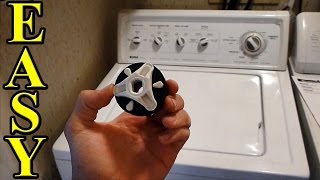
Yes, many homeowners can replace these parts. Lid switches and door locks are usually straightforward: unplug, remove access panels or console, disconnect the harness, swap the part, and reassemble. Motor coupling replacement is more involved (remove cabinet, basket and clutch) but is doable with basic tools and a service manual or video. If the repair involves motor electrical testing or control board troubleshooting, consider hiring a technician.
Related How-To Videos
Real DIY Repair Stories
Be the first to share your repair story!
Share Your Repair Story
Your experience helps other homeowners fix their appliances. Tell us how it went!
Can't Fix It Yourself? Find a Local Technician
It's perfectly okay to call a professional. Some repairs require specialized tools, deep teardowns, or dealing with complex systems that are better left to the pros.
Find the Right Part for Your Appliance
Don't guess — search your exact appliance model number at ProsourceParts.com to find the correct OEM compatible replacement part. They offer fast free shipping, guaranteed fit, and thousands of parts in stock.
Your Free Parts Videos
Whether your dishwasher won't drain, your dryer stopped heating, or your fridge isn't cold, we've created simple repair guides for the most common appliance problems homeowners face. Each guide explains what's going wrong, the most likely causes, and which replacement parts fix the issue. When you're ready to order, we link directly to ProsourceParts.com where you can search by model number and get the right part shipped fast.