
Washer Fills, Hums and Won't Agitate or Drain – What Fixes This?
Need the replacement part? Search your model number at for guaranteed fit and fast free shipping.
Understanding the Problem
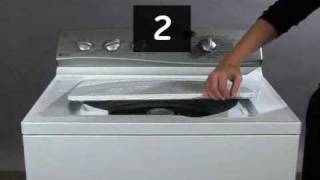
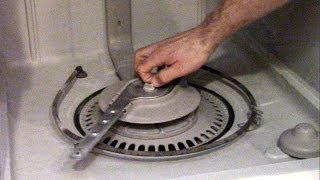
Brief explanation: If your washer fills with water, then only makes a faint humming noise and neither agitates nor drains, the motor is likely getting power but can’t turn the drum or the pump is blocked/failed. Humming means the motor or pump is trying to run but is stalled or overloaded. Typical culprits are a jammed or clogged drain pump, a broken motor coupling (on top-load direct-drive machines), a slipped/broken drive belt (belt-drive machines), a failed lid switch/lid lock, or an electrical/control failure. Step-by-step diagnostic and repair instructions: 1) Safety first: Unplug the washer and turn off the water supply before doing any inspection or repairs. Wear gloves and eye protection. 2) Reproduce the symptom and listen carefully: - Run a drain/spin cycle. If you hear a hum but nothing moves, note whether the hum is coming from the back/bottom (pump/motor area) or from under the cabinet (motor/coupling). 3) Check the lid/lid lock: (Top-load washers especially) - The washer will not agitate or spin if the lid switch is faulty. With power off, open the cabinet or access panel and visually inspect the lid switch for damage. - Test for continuity with a multimeter when the switch is actuated. Replace the lid switch/lid lock assembly if it shows no continuity. 4) Inspect the drain pump and hoses: - Remove the lower front access panel (or tilt washer back for base access) and locate the drain pump and hoses. - Disconnect the drain hose from the pump and check for obstructions (coin, sock, debris). Manually spin the pump impeller — it should turn fairly freely. If it’s jammed or you find debris, clear it. - If the impeller is stiff or the pump only hums when energized, the pump motor is likely failing and should be replaced. - Check the drain hose for kinks or clogs and remove/clean the pump filter/trap if your model has one. 5) Check the motor coupling (direct-drive top-load washers): - If the drum won’t turn and you hear a hum from the motor area, remove the cabinet and inspect the small plastic/nylon coupling between motor and transmission. If it’s broken or shredded replace it (it’s inexpensive and commonly fails). 6) Inspect the drive belt (belt-drive washers): - If your washer uses a belt, inspect for breakage, severe wear, or slippage. Replace the belt if it’s loose or damaged. 7) Test the motor and capacitor (if applicable): - With the washer unplugged, check motor terminals for burnt wires and check the start capacitor (on some models) for visible damage. Use a multimeter to check motor windings for continuity per the service manual. If the motor is stuck (locked rotor) it may hum and not spin; a bad motor often requires replacement. 8) Check the timer/control board and wiring: - If mechanical parts test OK, inspect the control/timer board for burned components or bad relays. Faulty relays can supply power to the motor but not the right phase/sequence, causing humming without movement. Control-board issues are less common but possible. 9) Replace the failed part and reassemble: - Pump: remove old pump (unplug connectors and hose clamps), install new pump, reconnect hoses and wiring, test drain cycle. - Motor coupling: remove motor and transmission screws, replace coupling, reassemble. - Lid switch: remove old switch assembly and replace. - Belt: remove old belt, route new belt on pulley and re-tension. 10) Final test: - Reconnect power, run a complete cycle through wash and drain to confirm problem is fixed. Watch for leaks and listen for normal motor/pump sounds. Safety note: Always unplug the washer before opening panels or touching electrical components. If you are unsure about testing live components (motor, capacitor, board), contact a qualified technician. Replacing pumps, couplings, belts, and lid switches is typically a safe DIY job for someone with basic mechanical skills; replacing motors or control boards may require more experience.
Common Symptoms
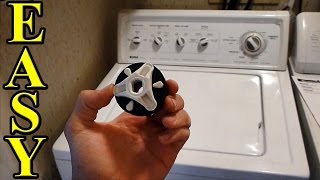
Washer fills normally, then makes a humming noise, drum does not agitate or spin, washer does not drain, water remains in tub. Sometimes a faint vibration or attempt to move but no rotation.
Common Causes
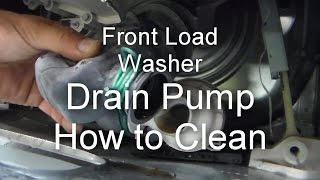
- Clogged or jammed drain pump or pump impeller
- Broken motor coupling (direct-drive top-load washers)
- Worn or broken drive belt (belt-drive washers)
- Failed lid switch or lid lock preventing motor operation
- Seized motor or failed start capacitor
- Faulty control board/timer or wiring issue
Popular Parts That Fix This Problem
These are the most common replacement parts that fix this problem. When you're ready to order, click below to find the right part at ProsourceParts.com — just search by your appliance model number for a guaranteed fit.

Helpful Repair Tip
If the washer hums but the pump impeller stalls when you try to spin it by hand or if the motor shaft doesn't turn under load, start by checking the drain pump and the motor coupling — those are the most common and easy-to-replace causes.
Frequently Asked Questions
My washer hums but the drum turns if I spin it by hand — is that the pump or motor?
If the drum turns freely by hand and the machine still hums and won’t agitate, check the motor coupling (top-load) or the drive belt (belt-drive). If the drum can't be turned by hand and you hear humming from the pump area, it’s more likely the drain pump is jammed or the motor is seizing.
Can I keep using the washer until I get parts?
No — continuing to run the washer when it hums and won't operate can overheat and burn out the motor or damage the pump. Turn the machine off, unplug it, and either fix the issue or schedule the repair. Clearing simple blockages in the pump/filter is often a fast temporary fix, but replace any failed mechanical part promptly.
Related How-To Videos
Real DIY Repair Stories
Be the first to share your repair story!
Share Your Repair Story
Your experience helps other homeowners fix their appliances. Tell us how it went!
Can't Fix It Yourself? Find a Local Technician
It's perfectly okay to call a professional. Some repairs require specialized tools, deep teardowns, or dealing with complex systems that are better left to the pros.

Find the Right Part for Your Appliance
Don't guess — search your exact appliance model number at ProsourceParts.com to find the correct OEM compatible replacement part. They offer fast free shipping, guaranteed fit, and thousands of parts in stock.
Your Free Parts Videos
Whether your dishwasher won't drain, your dryer stopped heating, or your fridge isn't cold, we've created simple repair guides for the most common appliance problems homeowners face. Each guide explains what's going wrong, the most likely causes, and which replacement parts fix the issue. When you're ready to order, we link directly to ProsourceParts.com where you can search by model number and get the right part shipped fast.