
Washer Agitator (AGT) — What Causes Agitator Problems and How to Fix Them
Need the replacement part? Search your model number at for guaranteed fit and fast free shipping.
Understanding the Problem
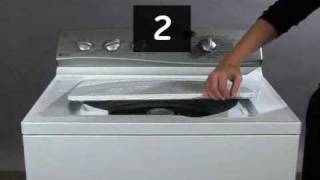
Brief explanation: "AGT" commonly refers to the washer agitator — the tall finned piece in the center of a top-load washer that moves clothes back and forth. When the agitator fails you may see no agitation, irregular agitation (only during spin), loud grinding, or a loose/wobbly agitator. Most common causes are worn agitator dogs (directional cogs), stripped splines on the agitator or transmission shaft, a broken drive coupling, or a failing transmission/gearcase. Step-by-step diagnostic and repair steps: 1) Confirm the symptom: Run a short agitation cycle (no clothes) and observe. Note if the basket spins normally during spin cycle but there is no back-and-forth agitation, or if the agitator is loose/wobbly, or if there are grinding/noise symptoms. 2) Unplug power and shut off water: Always disconnect power before accessing internal components. For added safety turn off water and unplug the washer. 3) Remove the fabric softener dispenser/cap (if present): On many units the softener cup or top cap pops off. Use a flat screwdriver to pry gently at the seam. 4) Access the agitator fastener: Under the cap you’ll usually find a bolt/hex nut or a plastic retainer that secures the agitator to the transmission shaft. Remove that fastener (common fasteners are 7/16” or 1/2” sockets or an 8 mm; some use a 3/8" drive bolt). Keep the fastener and any washers. 5) Pull the agitator off: Most agitators lift straight up; older two-piece agitators (upper/lower) may require you to remove the upper cap or separate pieces. If it’s stuck, a firm upward pull or a rubber mallet tap on the sides (after removing the bolt) will free it. Be careful — the lower piece may have sharp edges. 6) Inspect agitator components: - Agitator dogs/directional cogs: small plastic pawls that allow agitation one way. If they’re chewed, cracked or missing, replace them. - Splines in the agitator and on the drive shaft: Look for rounded, flattened or missing teeth. If the splines are stripped on the agitator you can often replace the agitator; if splines on the shaft/transmission are stripped the transmission or a splined adapter must be addressed. - Agitator cam/washer (on some models): Check for wear or cracking. 7) Inspect drive coupling and cam assembly (on direct-drive washers): The drive coupling (rubber/nylon piece between motor and transmission) often fails and lets the transmission or basket move but not the agitator. Replace if shredded or worn. 8) Check for foreign objects: Coins or small items trapped between agitator and basket can jam and damage parts. Remove any debris. 9) Replace worn parts: Install new agitator dogs or an agitator repair kit, replace the agitator if splines are stripped, or replace the drive coupling / cam assembly as needed. Use model-specific replacement parts. 10) Reassemble and test: Reinstall the agitator, torque the retaining bolt to snug (don’t overtighten plastic parts), snap on the cap/softener cup, restore power, and run a test cycle with no clothes. Verify normal agitation and listen for unusual noises. Practical how-to fixes (common repairs): - Replace agitator dogs: Remove agitator, pop out old dogs, press new dogs into place following orientation arrows, reassemble. - Replace split agitator upper/lower: Remove fastener, separate pieces, swap the damaged section for a new part, secure with the original bolt and clips. - Replace drive coupling/cam: Remove washer cabinet or access motor/transmission per model instructions, remove motor-to-transmission coupling and install new part, test. - If splines on the transmission shaft are stripped: Often requires replacing the transmission/gearcase or a splined adapter if available — this is a more advanced repair. Safety note: Always disconnect power before disassembly. If the repair requires removing the washer cabinet, support panels carefully and keep track of grounding wires. If you are not comfortable lifting heavy components (transmission), hire a professional.
Common Symptoms
No agitation (only spin works), agitator spins freely or feels loose, loud grinding during agitation, intermittent agitation, or the agitator only works in one direction.
Common Causes
- Worn/broken agitator dogs (directional cogs)
- Stripped splines on agitator or transmission shaft
- Broken or worn drive coupling/cam assembly
- Foreign object jam or damaged agitator cam
- Failing transmission/gearcase
Popular Parts That Fix This Problem
These are the most common replacement parts that fix this problem. When you're ready to order, click below to find the right part at ProsourceParts.com — just search by your appliance model number for a guaranteed fit.

Helpful Repair Tip
Quick confirm: Remove the agitator and manually turn the transmission shaft. If the shaft turns smoothly and the agitator dogs are worn, dogs are the likely culprit. If the shaft teeth/splines are stripped or the shaft turns but the basket doesn’t move properly, inspect the drive coupling or transmission.
Frequently Asked Questions
How do I know if the agitator dogs are bad or the transmission is bad?
Remove the agitator and inspect the small plastic dogs. If they are visibly worn, cracked, or missing, replacing them usually fixes the issue. If the dogs are good but the splines on the shaft or inside the agitator are rounded/stripped, or if the motor turns but nothing engages, the problem may be the drive coupling or transmission. Manual turning of the transmission shaft and checking for smooth engagement helps isolate the cause.
Can I replace the agitator or dogs myself and how much will it cost?
Yes — replacing agitator dogs or the agitator assembly is a common DIY for top-load washers. Cost for parts typically ranges from $10–$60 for dogs/repair kits and $30–$120 for a full agitator assembly, depending on model. Replacing a drive coupling is usually $15–$40 in parts. If the transmission needs replacement, labor and parts can be several hundred dollars; consider a professional for transmission work.
Related How-To Videos
Real DIY Repair Stories
Be the first to share your repair story!
Share Your Repair Story
Your experience helps other homeowners fix their appliances. Tell us how it went!
Can't Fix It Yourself? Find a Local Technician
It's perfectly okay to call a professional. Some repairs require specialized tools, deep teardowns, or dealing with complex systems that are better left to the pros.

Find the Right Part for Your Appliance
Don't guess — search your exact appliance model number at ProsourceParts.com to find the correct OEM compatible replacement part. They offer fast free shipping, guaranteed fit, and thousands of parts in stock.
Your Free Parts Videos
Whether your dishwasher won't drain, your dryer stopped heating, or your fridge isn't cold, we've created simple repair guides for the most common appliance problems homeowners face. Each guide explains what's going wrong, the most likely causes, and which replacement parts fix the issue. When you're ready to order, we link directly to ProsourceParts.com where you can search by model number and get the right part shipped fast.