
Samsung RF268ABRSXAA — Common Refrigerator Problems and What Parts Fix Them
Need the replacement part? Search your model number at for guaranteed fit and fast free shipping.
Understanding the Problem
This guide covers the most common problems owners see on the Samsung RF268ABRSXAA (warm fridge/freezer, no ice/water, leaks, and unusual noises) and gives step-by-step diagnostics and practical repair steps you can perform at home. Always confirm your model number and turn off power and water before working on the appliance. 1) Symptom: Fridge or freezer not cooling properly 1. Check basic settings: confirm temperature setpoints (fridge 37°F/3°C; freezer 0°F/-18°C). Reset to defaults and wait 24 hours after changes. 2. Inspect airflow: ensure vents inside freezer/fridge are not blocked by food and that doors seal fully. Check door gaskets for cracks or debris. 3. Clean condenser coils: unplug fridge, pull it out, use vacuum/brush to remove dust from coils and the area around the compressor. Dirty coils reduce cooling capacity. 4. Verify fans run: with power on and doors open, listen/observe the evaporator fan (inside freezer) and condenser fan (rear lower). If a fan is silent or wobbles, it likely needs replacement. 5. Test defrost system: if freezer evaporator is iced over, cooling will be impaired. Look for frost on evaporator or mention of long running cycles. Common failed parts: defrost heater, defrost thermostat/thermistor, or defrost control (main board). Diagnose by defrost continuity checks with a multimeter and by running a manual defrost cycle if available. 6. Check compressor/start device: listen for compressor hum. If compressor does not start and you hear clicking, the start relay or overload may be bad. Replace start relay if defective; if compressor itself is seized or the sealed refrigerant system is compromised, call a certified appliance tech. 7. If all above are OK but performance is poor, sealed system fault (low refrigerant, compressor failure) may be present — this requires a licensed refrigeration technician. Step-by-step example repair: Replace evaporator fan motor 1. Unplug refrigerator and remove food. Turn off water if working near water components. 2. Remove freezer shelves and back panel inside freezer to expose evaporator fan and motor. 3. Disconnect fan wiring harness and any retaining clips. Remove motor and install new motor (confirm part compatibility). Reassemble panels and restore power; verify fan runs and cooling improves over 4–24 hours. 2) Symptom: Ice maker not making ice or water dispenser not working 1. Confirm water supply: ensure shutoff valve under sink/fridge is open and line is not kinked. Remove filter and bypass (or replace filter) to rule out clogged filter. 2. Listen/observe water inlet valve: when dispenser or ice maker calls for water you should hear a click and water flow. If valve is silent or does not pass water, the water inlet valve often needs replacement. 3. Check ice maker assembly: if the ice maker cycles but does not fill, it could be the inlet valve, water line, or ice maker module. If ice cubes are hollow or tiny, poor water flow or low fill pressure is likely. 4. If dispenser motor runs but no water reaches dispenser, check the dispenser actuator switch and solenoid and the reservoir/pump (if equipped). Step-by-step example repair: Replace water inlet valve 1. Turn off water to refrigerator and unplug power. 2. Pull fridge out, remove rear access panel to access valve at bottom back. Place a towel to catch drips. 3. Note wiring connections, disconnect electrical connector(s) and remove water lines (have bucket/towel). Remove mounting screws and replace valve with new unit with matching ports. 4. Reconnect water lines (use new ferrules/crimp or push-fit fittings as needed), restore water slowly and check for leaks, then plug in and test dispenser and ice maker. 3) Symptom: Water leak under fridge 1. Check the defrost drain: common cause is clogged defrost drain in freezer causing water to overflow onto floor. Remove freezer drawers and clear drain with warm water or a flexible tube/pipe cleaner. 2. Inspect water inlet line and connections for drips. Replace cracked tubing and tighten fittings. 3. Examine the drain pan under the fridge for cracks or mis-positioning. Safety note: Always unplug the refrigerator and shut off the water supply before performing repairs that involve electrical connections or water lines. Use insulated tools and a multimeter to verify power is off. Repairs involving refrigerant, sealed system brazing, or compressor replacement must be performed by a licensed appliance or refrigeration technician.
Common Symptoms
Warm fridge/freezer, frost/ice build-up in freezer, evaporator/condenser fan noise or failure, ice maker not filling or making ice, water dispenser no flow, leaks under fridge, loud humming or clicking.
Common Causes
- Restricted airflow or dirty condenser coils reducing cooling efficiency
- Failed evaporator/condenser fans, defrost components (heater/thermistor) or control board
- Faulty water inlet valve, clogged filter/line, or sealed-system/compressor issues
Popular Parts That Fix This Problem
These are the most common replacement parts that fix this problem. When you're ready to order, click below to find the right part at ProsourceParts.com — just search by your appliance model number for a guaranteed fit.

Helpful Repair Tip
To confirm a failed fan or inlet valve: open the freezer and press the door switch — if the evaporator fan never runs when compressor is on, the fan motor is likely bad. For water issues, cycle the dispenser while listening for a click at the inlet valve; no click + no water usually means a bad valve or no water supply.
Frequently Asked Questions
How do I reset the ice maker on this Samsung model?
Basic reset methods: lift the ice maker bail arm up for 10–15 seconds then lower it; or unplug the refrigerator for 5 minutes to reset electronics. Some models have a test or reset button on the ice maker module—press and hold it for about 5–10 seconds until you hear a motor cycle. If reset doesn't restore ice production, check water supply, inlet valve, and ice maker module for faults.
When should I call a professional technician?
Call a licensed appliance technician if: the compressor does not run or humming/clicking indicates start device/compressor problems, you suspect a sealed-system refrigerant leak, you need refrigerant handling or brazing, or if diagnostics show a bad main control board. Also call a pro if electrical troubleshooting is outside your comfort zone.
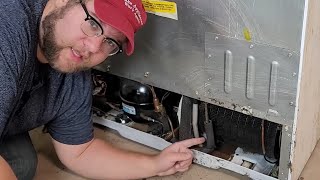
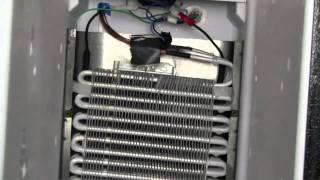
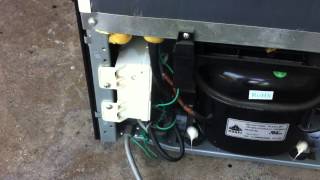
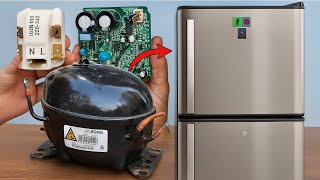
Related How-To Videos

Real DIY Repair Stories
Be the first to share your repair story!
Share Your Repair Story
Your experience helps other homeowners fix their appliances. Tell us how it went!
Can't Fix It Yourself? Find a Local Technician
It's perfectly okay to call a professional. Some repairs require specialized tools, deep teardowns, or dealing with complex systems that are better left to the pros.

Find the Right Part for Your Appliance
Don't guess — search your exact appliance model number at ProsourceParts.com to find the correct OEM compatible replacement part. They offer fast free shipping, guaranteed fit, and thousands of parts in stock.
Your Free Parts Videos
Whether your dishwasher won't drain, your dryer stopped heating, or your fridge isn't cold, we've created simple repair guides for the most common appliance problems homeowners face. Each guide explains what's going wrong, the most likely causes, and which replacement parts fix the issue. When you're ready to order, we link directly to ProsourceParts.com where you can search by model number and get the right part shipped fast.