
RGB745EEHBBB Refrigerator — Common Problems, Diagnostics & How to Fix Them
Need the replacement part? Search your model number at for guaranteed fit and fast free shipping.
Understanding the Problem
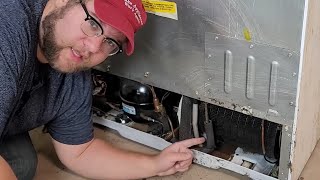
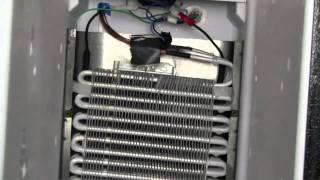
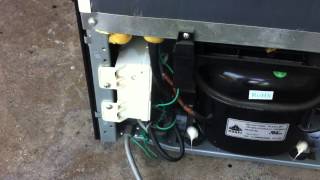
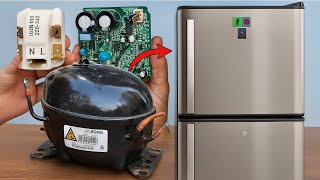
This guide covers the most common failures owners see on GE-style French-door refrigerators with model numbers like RGB745EEHBBB: not cooling (fridge or freezer), excessive frost/ice in the freezer, noisy operation, and water/ice dispenser problems. Follow these diagnostic and repair steps in order — start with the simplest checks and only move to sealed-system or electrical-board work if earlier steps don't fix the issue. 1) Confirm symptom and environment: verify temperature settings (fridge 37–40°F / 3–4°C, freezer 0°F / -18°C), ensure doors seal and open/close properly, and check ambient room temperature (very hot or very cold rooms affect performance). 2) Check condensers and airflow: unplug the fridge, pull it out, and inspect the condenser coils and access areas. Clean dusty coils and remove obstructions around the condenser fan. Re-power and listen: with clean coils, compressor should run steadily and fan(s) should spin. 3) Verify fans and airflow inside the cabinet: open freezer and refrigerator and manually (briefly) activate doors to watch evaporator fan and fresh-food evaporator/damper operation. If fridge section is warm but freezer is cold, suspect a blocked air path (damper) or evaporator frost. 4) Inspect for frost/ice on evaporator: remove rear freezer evaporator cover (typically requires removing shelves and screws) and look for heavy frost buildup on the evaporator coils — that indicates defrost system failure (defrost heater, defrost thermostat/DFT, or defrost control/board/thermostat). 5) Test defrost components: with the freezer panel off and power disconnected, perform continuity checks on the defrost heater and defrost thermostat; then with power on (careful) observe whether the defrost cycle runs on schedule (use a diagnostic mode if available). Replace the faulty component(s) if continuity or cycle checks fail. 6) Check evaporator and condenser fans: fans failing will reduce heat transfer and cause warm temps. Remove protective grills and test fan motors — they should spin free and run when the fridge calls for them. Replace fans that are noisy, stuck, or electrically dead. 7) Compressor and start device checks: listen for the compressor. If you hear clicking or the compressor hums then stops, suspect a bad start relay/overload. Unplug, remove the relay from the compressor, and test with a multimeter or substitute a known-good relay. Note: a completely dead compressor that taps and won’t run likely indicates sealed-system failure and needs a certified refrigerant technician. 8) Thermistors and control boards: thermistors (temperature sensors) tell the control board to run cooling and defrost cycles. If sensors read incorrectly the board may not call for cooling. Test thermistors by measuring resistance at different temperatures or compare with known-good readings in service literature. If sensors are good but operations are inconsistent, the main control board or user interface board may be failing. 9) Water/ice system diagnostics: if dispenser or ice maker fails, first check the water filter, then the water supply line and valve. Replace the water filter, check for kinks, and test the water inlet valve for proper solenoid operation (valve should hum/click and pass water when energized). For ice maker problems, check the ice maker module for fill, harvest and motor operation and the water fill tube for clogs or frozen lines. 10) Final verification and testing: after repairs, allow the unit 24–48 hours to stabilize (longer if compressor or sealed-system work was done). Monitor temperature, frost pattern, and ice/dispenser performance. Safety note: always disconnect power before accessing electrical components or removing panels. Refrigerant handling and sealed-system repairs require EPA certification and specialized tools — stop and call a licensed refrigeration technician if you suspect a refrigerant leak or compressor replacement is needed.
Common Symptoms
Fridge or freezer not cooling; freezer frosting up; loud humming or clicking from compressor area; water dispenser or ice maker not dispensing or not making ice.
Common Causes
- Dirty condenser coils or blocked airflow reducing heat rejection
- Failed evaporator fan or condenser fan causing poor internal airflow
- Defrost system failure (heater/thermostat/control) resulting in evaporator frost build-up
Popular Parts That Fix This Problem
These are the most common replacement parts that fix this problem. When you're ready to order, click below to find the right part at ProsourceParts.com — just search by your appliance model number for a guaranteed fit.

Helpful Repair Tip
Start with the easy checks: clean condenser coils, replace the water filter, and confirm evaporator fan runs. If the compressor clicks on/off or never runs, test/replace the start relay before assuming a sealed-system failure.
Frequently Asked Questions
How do I find the exact model and serial number on my fridge?
Open the fresh-food compartment and look on the walls or ceiling, or check the side wall of the refrigerator case. The model/serial tag is usually inside on the upper left or right, or on the base/grille near the front. Use that model number when ordering parts or looking up service manuals.
Is a compressor or sealed-system failure something I can fix myself?
No — sealed-system work (compressor replacement, refrigerant recovery, brazing) requires specialized tools, leak testing, and EPA refrigerant certification. For sealed-system failures, call a licensed refrigeration technician. You can safely perform non-sealed repairs like replacing fans, relays, defrost heaters, thermistors, water valves, and control boards if you are comfortable with basic electrical safety (unplugging the unit and using a multimeter).
Related How-To Videos
Real DIY Repair Stories
Be the first to share your repair story!
Share Your Repair Story
Your experience helps other homeowners fix their appliances. Tell us how it went!
Can't Fix It Yourself? Find a Local Technician
It's perfectly okay to call a professional. Some repairs require specialized tools, deep teardowns, or dealing with complex systems that are better left to the pros.

Find the Right Part for Your Appliance
Don't guess — search your exact appliance model number at ProsourceParts.com to find the correct OEM compatible replacement part. They offer fast free shipping, guaranteed fit, and thousands of parts in stock.
Your Free Parts Videos
Whether your dishwasher won't drain, your dryer stopped heating, or your fridge isn't cold, we've created simple repair guides for the most common appliance problems homeowners face. Each guide explains what's going wrong, the most likely causes, and which replacement parts fix the issue. When you're ready to order, we link directly to ProsourceParts.com where you can search by model number and get the right part shipped fast.