
Microwave Won't Start – What Part Fixes This Problem?
Need the replacement part? Search your model number at for guaranteed fit and fast free shipping.
Understanding the Problem
When a microwave 'won't start' it can mean several different behaviors: nothing at all happens when you press Start (no light, no fan, no turntable), the door lock light is on but the oven will not run, or the microwave powers up (lights, clock) but refuses to begin a cook cycle. The correct diagnosis depends on these symptoms because each points to different parts—electrical supply and fuses, safety interlocks, or the control electronics. Microwaves contain high-voltage parts and internal fuses that protect against dangerous faults. A simple symptom check (does the clock or light come on, do you hear relays or humming, does the turntable move?) will narrow suspects. In many cases a failed door interlock, blown internal fuse, or a dead control board/keypad are the most common reasons a microwave won’t start. Always unplug the appliance before testing or replacing internal components and consider a qualified technician for repairs that involve the high-voltage circuitry (transformer, diode, capacitor, magnetron).
Common Symptoms
No response when Start is pressed, clock/lights but no cooking, door must be firmly closed to attempt start, clicking or humming with no start.
Common Causes
- Faulty or misaligned door interlock (safety) switch preventing the unit from sensing a closed door
- Blown internal fuse or thermal cutoff caused by a surge or component failure
- Defective control board (main PCB) or keypad/membrane that won't send a start signal
- Power supply issues: bad outlet, damaged power cord, or loose wiring
- High-voltage component failure (transformer/diode/capacitor/magnetron) if the unit hums but won’t run
Popular Parts That Fix This Problem
These are the most common replacement parts that fix this problem. When you're ready to order, click below to find the right part at ProsourceParts.com — just search by your appliance model number for a guaranteed fit.

Helpful Repair Tip
Start with the simplest checks: confirm the outlet works and the microwave isn't in demo/child-lock mode, then test door interlock switches for continuity with a multimeter and inspect the internal fuse(s) — these are the most common failures when the oven is completely unresponsive.
Frequently Asked Questions
My microwave has power (light/clock) but won't start — what should I check first?
First check the child lock or demo mode on the control panel and try a different outlet or test the outlet with another appliance. If the outlet and lock aren’t the issue, unplug the microwave and inspect the door switches for proper operation (they should show continuity when the door is closed) and check the internal fuse for continuity. If those appear OK, the control board or keypad may be failing.
Is it safe to repair a microwave myself?
Simple checks like testing the outlet, door switches, and fuses can be done if you're comfortable with a multimeter and unplugging the appliance. However, microwaves contain lethal high-voltage components (transformer, capacitor, magnetron) that can retain a charge even when unplugged. For any repair involving high-voltage parts or if you aren’t confident, hire a qualified technician.
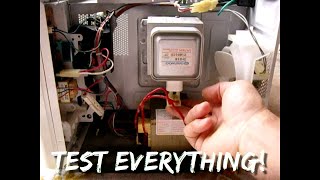
Related How-To Videos
Real DIY Repair Stories
Be the first to share your repair story!
Share Your Repair Story
Your experience helps other homeowners fix their appliances. Tell us how it went!
Can't Fix It Yourself? Find a Local Technician
It's perfectly okay to call a professional. Some repairs require specialized tools, deep teardowns, or dealing with complex systems that are better left to the pros.

Find the Right Part for Your Appliance
Don't guess — search your exact appliance model number at ProsourceParts.com to find the correct OEM compatible replacement part. They offer fast free shipping, guaranteed fit, and thousands of parts in stock.
Your Free Parts Videos
Whether your dishwasher won't drain, your dryer stopped heating, or your fridge isn't cold, we've created simple repair guides for the most common appliance problems homeowners face. Each guide explains what's going wrong, the most likely causes, and which replacement parts fix the issue. When you're ready to order, we link directly to ProsourceParts.com where you can search by model number and get the right part shipped fast.