
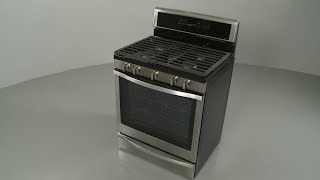
Maytag Gas Range — Common Problems and What Parts Fix Them
Need the replacement part? Search your model number at for guaranteed fit and fast free shipping.
Understanding the Problem
Brief overview: Maytag gas ranges commonly show a handful of repeatable problems: burners won't ignite or have weak flames, constant clicking, the oven won't reach temperature or won't light, and sometimes a gas smell. These symptoms usually point to one of a few components: the surface or oven igniter/electrode, the spark/ignition module, clogged burner ports, the oven temperature sensor/thermistor, or a faulty gas valve/regulator. Step-by-step diagnostics and repairs (numbered): 1) Safety first - Turn the range off and shut off the gas supply at the shutoff valve behind the appliance before doing any repairs involving gas lines. Unplug the range or switch off the circuit breaker before electrical work. If you smell a strong gas odor, do not power anything on — ventilate and call your gas utility or a qualified technician. 2) Identify the exact symptom and gather model info - Note whether the problem affects cooktop burners, oven, or both. Write down your range model number (usually on a tag behind the oven door or on the frame behind the drawer) — replacement parts depend on model. 3) Cooktop burners won’t light at all - First check: Are you hearing a click and seeing a spark? If yes, order: clean burner ports and caps, check electrode gap; test spark module/electrode. - If you see no spark: test for 120VAC to the ignition module when a burner knob is pushed (use a multimeter) — if there’s no voltage, the switch/knob micro switch or wiring/ignition module may be bad. - How to fix: Remove burner cap and head, clean clogged ports with a soft wire or toothbrush and soapy water, dry completely. Tighten or realign electrode (should be ~1/8" from burner ring). Replace faulty electrode/ignition module if no spark voltage present. 4) Burners light but have a weak or yellow/orange flame - Likely: partially clogged ports, incorrect air shutter, or low manifold pressure. - How to fix: Remove burner ring and ports, clean carbon/grease, dry. Check burner cap seating. If flame still weak, test other burners — if all weak, suspect regulator/manifold pressure or gas supply issue; call a qualified technician or your gas utility. 5) Continuous clicking after burner lights or clicking that never stops - Likely: Moisture in the switch/electrode, a stuck or damaged spark switch, or damaged ignition module. - How to fix: Turn everything off and allow to dry 24 hours. Clean around the switch/electrode. If the issue persists, remove power and test the spark switch continuity (each knob switch should change state when turned). Replace the faulty switch or ignition module. 6) Oven won’t light or oven igniter glows but oven won’t come on - If the igniter doesn’t glow at all: test for continuity on the igniter; if open, replace the igniter. - If the igniter glows but the burner doesn’t open: the igniter may have enough continuity but not enough current draw to open the gas safety valve. Replace the igniter if it glows dimly or takes a long time to glow. Also test the safety gas valve and the control board/ignition module for proper voltage. - How to fix (oven igniter replacement): 1) Turn off power and gas. 2) Remove oven racks and access panel (bottom). 3) Disconnect igniter wiring. 4) Remove mounting screws and take out igniter (handle carefully — ceramic is fragile). 5) Install new igniter, reconnect wires, restore power/gas and test. 7) Oven not reaching or holding temperature - Check oven temperature sensor (thermistor). Use a multimeter to check resistance at room temp — typical ~1100 ohms at 70°F (value varies by model; check spec). If out of range or open, replace sensor. Also consider calibration: run an oven temp test with an oven thermometer and adjust bake temp in control settings if sensor fine. 8) Detecting gas smell - Immediate action: stop using the range, shut off the gas supply at the shutoff valve, open windows, leave the area, and call your gas provider or a certified gas appliance technician. Do not operate electrical switches or pilot lights; do not use phone in the area. 9) Replacing gas valves or regulator - If you suspect a leaking or malfunctioning gas valve/regulator, do not attempt gas-line repairs unless you are a licensed technician. These parts control manifold pressure and gas shutoff; replacement requires turning off gas, disconnecting the manifold, replacing the valve, leak testing with soapy water or a gas leak detector, and verifying proper burner flame. 10) Final testing and verification - After any repair, restore gas/power, test every burner and the oven several cycles, check flame color (blue with small yellow tips is usually normal), and check that clicking stops after ignition. Safety note: - Working on gas appliances carries fire and explosion risk. If you are not comfortable with gas valves, manifold lines, or electrical testing, hire a qualified appliance or gas technician. Always leak-test gas fittings after work and follow local codes.
Common Symptoms
Burners won’t ignite, weak or yellow flames, continuous clicking, oven won’t light or reaches temperature slowly, or gas odor near the appliance.
Common Causes
- Dirty or misaligned burner ports/electrodes preventing ignition
- Failed igniter or spark/ignition module
- Faulty gas valve, regulator, or oven temperature sensor
Popular Parts That Fix This Problem
These are the most common replacement parts that fix this problem. When you're ready to order, click below to find the right part at ProsourceParts.com — just search by your appliance model number for a guaranteed fit.

Helpful Repair Tip
To confirm a faulty oven igniter: remove the oven bottom shield, turn on bake and observe the igniter. If it does not glow within 30 seconds or glows very dimly and the gas valve never opens, the igniter is likely bad. You can also test igniter continuity with a multimeter (compare resistance to manufacturer spec).
Frequently Asked Questions
Why does my Maytag gas range keep clicking even when not in use?
Constant clicking usually means the ignition switch or electrode is sensing or trying to spark. Common causes: moisture trapped around the switch/electrode, food debris or grease, a faulty switch (knob micro switch), or a failing ignition module. Start by drying and cleaning around the control switches and burner bases. If the clicking continues, test the switch and ignition module and replace the defective component.
Is it safe to use my gas range if I smell a faint gas odor?
No — treat any gas odor as potentially dangerous. Immediately turn off the appliance and the main gas shutoff if you can do so safely, open windows to ventilate, and leave the area. Call your gas utility or a licensed service technician to inspect for leaks. Do not operate electrical switches, phones, or ignition sources in the area until the source is identified and fixed.
Related How-To Videos
Real DIY Repair Stories
Be the first to share your repair story!
Share Your Repair Story
Your experience helps other homeowners fix their appliances. Tell us how it went!
Can't Fix It Yourself? Find a Local Technician
It's perfectly okay to call a professional. Some repairs require specialized tools, deep teardowns, or dealing with complex systems that are better left to the pros.

Find the Right Part for Your Appliance
Don't guess — search your exact appliance model number at ProsourceParts.com to find the correct OEM compatible replacement part. They offer fast free shipping, guaranteed fit, and thousands of parts in stock.
Your Free Parts Videos
Whether your dishwasher won't drain, your dryer stopped heating, or your fridge isn't cold, we've created simple repair guides for the most common appliance problems homeowners face. Each guide explains what's going wrong, the most likely causes, and which replacement parts fix the issue. When you're ready to order, we link directly to ProsourceParts.com where you can search by model number and get the right part shipped fast.