
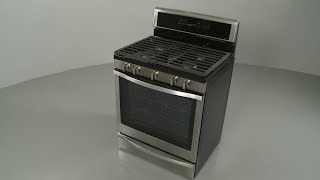
GE JGC9536ADS Gas Range — Common Problems & Parts That Fix Them
Need the replacement part? Search your model number at for guaranteed fit and fast free shipping.
Understanding the Problem
This guide covers the most common problems on the GE JGC9536ADS gas range — surface burners that don't light or spark, a bake/broil burner that won't ignite or heats poorly, continuous clicking/sparking, and control/display issues. Follow the numbered diagnostic and repair steps below for each symptom and finish by reading the safety note. 1) Surface burner won't light or sparks continuously a) Inspect burner cap and head: remove the cap and burner head, look for food debris or grease blocking ports. Clean ports with a soft brush or a straightened paper clip; soak caps in warm soapy water and dry thoroughly. b) Check cap alignment: improper seating will prevent ignition. Re-seat the burner cap and try again. c) Verify spark: with the top on, press the knob to the lite position and listen/look for spark at the electrode (small metal tip near the ports). If there is no spark, proceed to wiring and module checks. d) Check electrode condition: cracked or heavily corroded electrodes fail to spark — replace the electrode/surface igniter if damaged. e) Test spark module and wiring: disconnect power, remove back or control panel access to the spark/ignition module. Inspect harnesses for loose connectors, burnt wires, or corrosion. If no spark and wiring is good, replace the spark module. 2) Oven (bake/broil) won't ignite or oven heats very slowly a) Observe ignition sequence: set oven to Bake at 350°F and watch through the window. A functioning oven igniter should begin to glow within 30–90 seconds and the gas valve should open immediately after the igniter reaches operating temperature. b) If igniter never glows: check igniter wiring and connector. If wiring is intact and power is present, replace the igniter. c) If igniter glows but no flame or it takes long: the igniter may be weak (it glows but does not draw enough current to open the gas safety valve). Use a clamp ammeter on the igniter lead if available — a significantly low amp draw indicates a weak igniter and it should be replaced. d) Check the gas safety/oven valve: if the igniter is good but the valve does not open (no gas), the valve can be faulty. Replace the oven gas valve if diagnostic steps confirm. 3) Continuous clicking after burners are off a) Moisture trapped in the ignition area after cleaning or spills can cause continued sparking — remove and dry the burner components and surrounding area. b) If dry and clicking persists, inspect the igniter electrode and wiring for a short to ground (frayed wires or damaged insulation). Replace the defective harness or electrode. c) If wiring fine, replace the spark module. 4) Control/display problems (clock, oven not responding) a) Reset the range: power off at the circuit breaker for 30–60 seconds and restore power. If intermittent electronics issues persist, the electronic control board (clock/timer/oven control) may be faulty. b) Inspect for signs of burned components or swollen capacitors on the control board; replace the control board per manufacturer's part number if diagnostics point to board failure. Step-by-step: Replace oven igniter (typical) 1) Shut off gas supply to the range and disconnect electrical power at the breaker. 2) Remove oven racks and the oven bottom panel (or bottom access panel) to access the burner area. 3) Locate the igniter—mounted at the burner box near the broiler/bake burner. Note wiring connector location and orientation; take a photo. 4) Disconnect the igniter harness connector and remove the mounting screws holding the igniter bracket. 5) Remove old igniter, install the new igniter without touching the ceramic bulb with bare hands (oil shortens life). Reattach screws and reconnect the harness. 6) Reassemble the oven, restore power and gas, then test by setting oven to Bake 350°F and watching the ignition cycle. Step-by-step: Replace spark module (typical) 1) Turn off power at breaker and flip range out if needed for access. 2) Remove back panel or control panel to access ignition module. 3) Label and disconnect all ignition wires from the module (take photos). Remove mounting screws and replace module with OEM part. 4) Reconnect wires, secure module, restore power and test all burners. Safety note: Always turn off electrical power and gas before accessing internal components. If you smell gas strongly, stop, do not operate the appliance or switches, ventilate the area, leave the home, and call your gas utility or emergency services. When in doubt, hire a licensed appliance technician for gas-related repairs.
Common Symptoms
Surface burners won't light or spark continuously; oven does not ignite or heats very slowly; continuous clicking after turning burner off; inaccurate oven temperature or control/display errors.
Common Causes
- Clogged or misaligned surface burner caps or ports
- Failed surface electrode (igniter) or spark module
- Weak or failed oven (bake) igniter or gas safety valve
Popular Parts That Fix This Problem
These are the most common replacement parts that fix this problem. When you're ready to order, click below to find the right part at ProsourceParts.com — just search by your appliance model number for a guaranteed fit.

Helpful Repair Tip
To confirm a failing oven igniter: watch the igniter during a bake cycle — if it glows but the oven never lights or the glow is very dim/slow, the igniter is likely weak and should be replaced. If you have a clamp ammeter, a healthy igniter typically pulls roughly 3.0–3.6 A; a substantially lower reading indicates failure.
Frequently Asked Questions
What should I do if I smell gas near my GE JGC9536ADS?
If you smell gas, stop using the range immediately. Do not operate electrical switches, pilot lights, or phones inside the house. Open windows and evacuate everyone from the home. From a safe location, call your gas utility emergency number or 911. Have a qualified technician inspect and repair any gas leaks before using the appliance again.
How do I know whether to replace the igniter or the gas valve when my oven won't light?
Start by observing the igniter: if it does not glow at all, check wiring and replace the igniter. If the igniter glows slowly or dimly but the burner never lights, the igniter is likely weak and should be replaced. If the igniter glows normally and you still get no gas flow, the oven gas safety valve may be faulty. Use a clamp ammeter on the igniter lead to check current draw (low current suggests a weak igniter). If you're unsure or uncomfortable with gas appliance diagnostics, call a licensed technician.
Related How-To Videos

Real DIY Repair Stories
Be the first to share your repair story!
Share Your Repair Story
Your experience helps other homeowners fix their appliances. Tell us how it went!
Can't Fix It Yourself? Find a Local Technician
It's perfectly okay to call a professional. Some repairs require specialized tools, deep teardowns, or dealing with complex systems that are better left to the pros.

Find the Right Part for Your Appliance
Don't guess — search your exact appliance model number at ProsourceParts.com to find the correct OEM compatible replacement part. They offer fast free shipping, guaranteed fit, and thousands of parts in stock.
Your Free Parts Videos
Whether your dishwasher won't drain, your dryer stopped heating, or your fridge isn't cold, we've created simple repair guides for the most common appliance problems homeowners face. Each guide explains what's going wrong, the most likely causes, and which replacement parts fix the issue. When you're ready to order, we link directly to ProsourceParts.com where you can search by model number and get the right part shipped fast.