
GE DWSR483D3 Dishwasher — Common Problems, Diagnostics & What Parts Fix Them
Need the replacement part? Search your model number at for guaranteed fit and fast free shipping.
Understanding the Problem
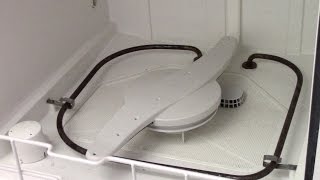
This guide covers the common problems owners experience with the GE DWSR483D3 (a built-in dishwasher): won't start, won't drain, leaks, poor cleaning, noisy operation, and no heat/dry. Below are prioritized diagnostic steps and clear repair actions you can do at home. Follow the numbered steps for each issue and finish with a safety reminder. 1) No power / won't start 1.1. Check power: verify dishwasher is plugged in, circuit breaker not tripped, and other nearby outlets are live. Flip breaker off/on to reset. 1.2. Inspect door latch and door switch: dishwasher won't start if latch or switch fails. Visually inspect latch for damage; test continuity on the door switch with a multimeter (expect near 0 ohms when closed). 1.3. Control board / keypad: if lights are dead but power is present, the control board or user interface may be bad. Run the built-in diagnostic cycle (consult manual) to check error codes. Repair steps: Replace a failed door latch/switch if it has no continuity. If the control board is unresponsive but power is present, replace the control board. 2) Not draining or standing water 2.1. Check filter & garbage: remove bottom rack, clean the filter assembly and sump area of debris. 2.2. Inspect drain hose and disposal connection: ensure hose is not kinked and knockout plug in garbage disposal has been removed if newly installed. 2.3. Test drain pump: run a drain cycle and listen. If you hear humming or nothing at all, the drain pump or its motor may be faulty. Remove lower access panel, disconnect the pump electrical connector, and test pump motor for continuity. Repair steps: Clean the filter and remove obstructions. If pump hums but doesn't pump, replace the drain pump/motor assembly. 3) Leaks 3.1. Identify source: run a short cycle and observe where water appears (front, underneath, door). Place paper towels to help locate drip. 3.2. Door gasket/check spray arm: inspect door gasket for tears and spray arms for cracks or loose mounting that can spray out the door seals. 3.3. Hose and tub seals: check inlet hose, drain hose, and the tub-to-pump seals for deterioration. Repair steps: Replace damaged door gasket, tighten/replace hoses, or replace the pump seal or tub-to-pump gasket. Ensure hose clamps are tight. 4) Poor cleaning / food left on dishes 4.1. Check spray arms and filters: remove and clean spray arms, clear holes with a toothpick, and remove and clean the filter and sump. 4.2. Inspect water inlet valve and water fill: insufficient water leads to poor cleaning. Listen for fill at cycle start; check water supply shutoff is open. 4.3. Test wash motor and circulation pump: if pump isn't moving water with no blockages, circulation motor may be bad. Repair steps: Clean/replace filters and spray arms. Replace inlet valve if it doesn't open or fill properly. Replace circulation pump/motor if no water movement. 5) No heat / poor drying 5.1. Confirm model features a heating element: some units rely on rinse aid and fan. If equipped, inspect heating element for continuity with a multimeter. 5.2. Check high-limit thermostat/thermistor: if open, the heater won't get power. Repair steps: Replace the heating element or thermostat/thermistor if they fail continuity tests. 6) Excessive noise or grinding 6.1. Inspect for foreign objects: broken glass or hard food can lodge in the pump area or spray arm. 6.2. Check motor bearings and sump assembly: worn bearings or a failing wash/drain motor cause loud noises. Repair steps: Remove debris. If noise persists, replace the wash motor or drain pump assembly. General replacement procedure (works for pump, inlet valve, door latch, heating element, control board): A. Safety first: turn off power at breaker and shut off water supply. Confirm no power with a non-contact tester. B. Access: open lower toe kick / access panel to reach parts. Remove bottom rack and insulation if needed. C. Document: take photos of wiring and hose routing; label connectors. D. Disconnect: remove electrical connectors and hose clamps; catch water with a towel or pan. E. Remove mounting screws and extract the failed part. F. Install new part: position, fasten screws, reconnect hoses and connectors per your photos, restore inlet water supply. G. Test: restore power, run a short cycle and check for leaks, operation, and error codes. Safety note: Always shut off power at the circuit breaker and disconnect water before working on the dishwasher. Wear gloves and eye protection when handling sharp metal edges and broken glass.
Common Symptoms
Dishwasher won't start, won't drain/standing water, leaks from door or bottom, poor cleaning, loud grinding noises, no heat for drying.
Common Causes
- Failed door latch or door switch preventing start
- Clogged filter, kinked drain hose, or failed drain pump
- Damaged door gasket or loose/deteriorated hose clamps causing leaks
- Faulty water inlet valve or circulation pump causing poor cleaning
- Failed heating element or thermostat causing no-dry/no-heat
- Foreign objects or worn motor bearings causing noise
Popular Parts That Fix This Problem
These are the most common replacement parts that fix this problem. When you're ready to order, click below to find the right part at ProsourceParts.com — just search by your appliance model number for a guaranteed fit.

Helpful Repair Tip
Run the dishwasher's diagnostic/service cycle to pull up error codes, and use a multimeter to check continuity on the door switch, drain pump, inlet valve, and heating element to confirm the faulty part.
Frequently Asked Questions
How do I put my GE DWSR483D3 into diagnostic/service mode?
Most GE dishwashers enter diagnostics with a specific sequence on the control pad (e.g., pressing Heated Dry and Normal quickly, then Start) — consult your owner's manual or look up the service manual for the exact sequence. The diagnostic cycle will run components so you can observe which parts fail and will often flash error codes to indicate the problem.
Can I replace the drain pump or inlet valve myself and how long will it take?
Yes, a competent DIYer can replace the drain pump or inlet valve. Typical time: 30–90 minutes. Steps: shut off power and water, remove lower access panel, document wiring, disconnect hoses and electrical connectors, remove mounting screws, swap the part, reconnect everything and test. If you're uncomfortable working with electrical connections or removing the dishwasher, hire a technician.
Related How-To Videos
Real DIY Repair Stories
Be the first to share your repair story!
Share Your Repair Story
Your experience helps other homeowners fix their appliances. Tell us how it went!
Can't Fix It Yourself? Find a Local Technician
It's perfectly okay to call a professional. Some repairs require specialized tools, deep teardowns, or dealing with complex systems that are better left to the pros.

Find the Right Part for Your Appliance
Don't guess — search your exact appliance model number at ProsourceParts.com to find the correct OEM compatible replacement part. They offer fast free shipping, guaranteed fit, and thousands of parts in stock.
Your Free Parts Videos
Whether your dishwasher won't drain, your dryer stopped heating, or your fridge isn't cold, we've created simple repair guides for the most common appliance problems homeowners face. Each guide explains what's going wrong, the most likely causes, and which replacement parts fix the issue. When you're ready to order, we link directly to ProsourceParts.com where you can search by model number and get the right part shipped fast.