
Frigidaire Ice Maker Not Making Ice – What to Check and How to Fix It
Need the replacement part? Search your model number at for guaranteed fit and fast free shipping.
Understanding the Problem
Brief explanation: Frigidaire ice makers stop making ice for a handful of common reasons: no water supply, clogged/iced fill tube, frozen or warm freezer, failed water inlet valve, or a bad ice maker module/motor/thermostat. Below are step-by-step diagnostic checks and practical repair steps you can follow to find and fix the problem. Diagnostic & repair steps: 1) Confirm basic settings and power - Verify the ice maker is switched ON (look for ON/OFF switch or arm inside the freezer). If your model has a test button, consult the manual for its location. - Check the fridge’s power: is the refrigerator running and is the freezer cold? If the entire fridge is off, reset breaker. 2) Check freezer temperature - Correct ice production requires a freezer around 0°F (−18°C). If freezer is warmer than ~10°F (−12°C) the ice maker may not cycle. Adjust temp and allow 24 hours for recovery. 3) Inspect the water supply and filter - Ensure the household water shutoff to the fridge is open. - If the fridge has a water filter, try bypassing or replacing it if clogged (filters >6–12 months are suspect). A clogged filter reduces or stops fill. - Check the water line for kinks or pinch points behind the fridge. - Confirm water to the valve: turn on a nearby faucet supplied by the same line to verify flow. 4) Check fill tube for ice blockage - Remove the freezer ice bucket and inspect the metal or plastic fill tube that drops water into the ice mold. If it’s frozen over, the ice maker won’t fill. - To clear, turn fridge off or set freezer warmer, and gently warm the tube with a hair dryer on low or let it defrost. Don’t use excessive force or sharp tools. 5) Test the water inlet valve - The valve sits at the rear lower section of the refrigerator where the water line connects. If the ice maker requests water but the valve doesn’t open, no water will enter the mold. - Diagnostic: put the ice maker into a fill cycle (use test button or manual advance). Listen for a humming/solenoid click at the valve. If silent and there is water pressure at the valve inlet, the valve is likely faulty. - Electrical test: unplug fridge, disconnect valve harness, test solenoid coils for continuity with a multimeter (continuity/ohms vary; a good solenoid usually reads a few hundred ohms—consult model spec). If open or infinite resistance, replace the valve. 6) Test ice maker module / motor / thermostat - Enter diagnostic/test mode per your model (many Frigidaire units have a small push-button or a tab). A working module will eject or rotate the ejector and then trigger the fill for a few seconds. - If the test button does nothing, check for 120 VAC at the module while it should be running (use meter). No voltage may point to wiring or control board problems; voltage present but no motor = bad module/gear motor. - If the thermostat inside the ice maker (some models use a bimetal thermostat) is faulty it may never tell the module the ice is frozen; replace the ice maker assembly or thermostat as required. 7) Inspect for mechanical jams and broken components - Look for broken ejector blades, jammed cubes, bent tines, or stripped gears which can prevent ejection or proper cycling. Replace the ice maker or gear kit if damaged. 8) Replace parts (common repairs): - Replacing a water inlet valve: turn off water and power, pull fridge away, access inlet valve in rear lower panel, disconnect tubing (have towel), remove mounting screws, swap valve, reconnect tubing, restore water and power, check for leaks. - Replacing the ice maker assembly/module: turn off power, remove ice bin, unscrew or unclip the ice maker from freezer wall, unplug wiring harness, remove old unit, install new unit in reverse order, reconnect power and water. Run test cycle and verify fill. 9) Final verification - After repairs, run a manual test cycle where possible. Allow 6–24 hours for the first tray to freeze fully and check for full-size cubes and proper ejection. Monitor for leaks and odd noises. Safety note: Always disconnect refrigerator power and shut off the water supply before doing electrical or plumbing work. Use gloves to protect from sharp sheet metal and avoid prolonged contact with evaporator fins. If you are not comfortable with electrical testing or removing panels, call a qualified appliance technician.
Common Symptoms
No ice produced; only partial trays; soft or watery cubes; ice maker cycles but no water fills; frozen fill tube; intermittent production; strange noises or continuous clicking.
Common Causes
- Closed or clogged water supply / clogged water filter
- Frozen or iced-over fill tube
- Failed water inlet valve or faulty ice maker module/motor/thermostat
Popular Parts That Fix This Problem
These are the most common replacement parts that fix this problem. When you're ready to order, click below to find the right part at ProsourceParts.com — just search by your appliance model number for a guaranteed fit.

Helpful Repair Tip
Put the ice maker into its diagnostic/test cycle and listen: if you hear the valve humming for several seconds during the fill step but no water flows, the inlet valve or water line is the issue. If the module is silent and freezer is cold, the ice maker assembly is likely bad.
Frequently Asked Questions
How do I reset a Frigidaire ice maker?
Most Frigidaire models have a test/reset button on the ice maker. To reset: open the freezer, press and hold the test button for about 5–10 seconds until the motor runs or you hear clicks. If no test button exists, turn the refrigerator power off for 1 minute and back on to force a reset. Check your model's manual for exact procedure.
When should I call a technician instead of fixing it myself?
Call a pro if you are uncomfortable shutting off water and power, if electrical testing shows inconsistent voltages, if there are refrigerant or compressor problems, or if you’ve replaced the obvious parts and the ice maker still won’t cycle. Also call a technician for any sealed-system (refrigerant) issues or complicated control board faults.
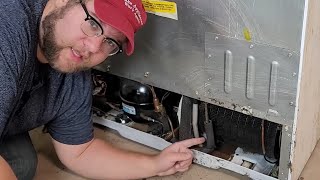
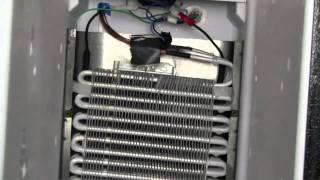
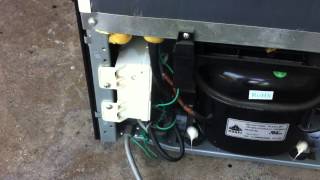
Related How-To Videos

Real DIY Repair Stories
Be the first to share your repair story!
Share Your Repair Story
Your experience helps other homeowners fix their appliances. Tell us how it went!
Can't Fix It Yourself? Find a Local Technician
It's perfectly okay to call a professional. Some repairs require specialized tools, deep teardowns, or dealing with complex systems that are better left to the pros.

Find the Right Part for Your Appliance
Don't guess — search your exact appliance model number at ProsourceParts.com to find the correct OEM compatible replacement part. They offer fast free shipping, guaranteed fit, and thousands of parts in stock.
Your Free Parts Videos
Whether your dishwasher won't drain, your dryer stopped heating, or your fridge isn't cold, we've created simple repair guides for the most common appliance problems homeowners face. Each guide explains what's going wrong, the most likely causes, and which replacement parts fix the issue. When you're ready to order, we link directly to ProsourceParts.com where you can search by model number and get the right part shipped fast.