
Freezer Not Defrosting – What Causes It and How to Fix It
Need the replacement part? Search your model number at for guaranteed fit and fast free shipping.
Understanding the Problem
If your freezer is frosting up, ice is building on the evaporator coil, or the freezer compartment is warmer than it should be, the automatic defrost system has likely failed. Most modern refrigerators use a defrost heater plus a defrost thermostat (or bi-metal) and a safety thermal fuse or defrost control/board to melt accumulated frost periodically. 1) Verify the symptom and isolate the issue - Check the evaporator: unplug the fridge, open the freezer and remove the rear evaporator cover. If there is a thick layer of frost/ice coating the evaporator fins, the defrost system isn't operating. - Confirm cooling otherwise works: with ice blocking the coils, you may still hear the compressor and fan run but airflow to the freezer will be restricted and temperatures will be off. 2) Visual & basic checks (power off) - Unplug the refrigerator before any work. - Inspect wiring to the evaporator heater, thermostat, thermal fuse and control board for burns, loose connectors or rodent damage. - Check the evaporator fan—if it's dead the freezer will get cold but circulation will be poor. This is separate from defrost but important to confirm. 3) Test the defrost heater for continuity - Remove the evaporator cover to access the heater (typically a thin tubular element under or in front of the fins). - Set your multimeter to resistance (ohms) and check across the heater leads. A working heater usually shows low resistance (often 10–50 Ω depending on model). Open/infinite resistance = heater is bad and must be replaced. 4) Test the defrost thermostat (bi-metal) - The defrost thermostat closes when the evaporator is cold. Remove it and measure continuity at cold temperatures—if it’s open when it should be closed (or always open), replace it. 5) Check the thermal fuse or defrost thermal cutoff - Many models have a one-time thermal fuse in series with the heater—if it’s blown it will read open. Replace the thermal fuse if open. 6) Check the defrost control (timer or main control board) - Older refrigerators use a mechanical defrost timer you can advance into the defrost cycle to see if the heater comes on. Newer units use the electronic control board which energizes the heater during defrost. If heater and thermostat test good but heater never gets voltage during a known defrost advance, the control board/timer or wiring is likely at fault. - With the fridge plugged in, carefully measure for voltage at the heater leads during a forced defrost (advance the timer or put the board into a service defrost). If there is voltage to the heater but the heater doesn’t heat, the heater is bad. If no voltage, the control/timer/wiring is the problem. 7) Basic repair steps (common fixes) - Replace the defrost heater: unplug refrigerator, remove evaporator cover, disconnect heater, install new heater assembly (match shape/orientation), reattach connectors, reassemble. - Replace the defrost thermostat: remove clip or bracket, unplug sensor leads, install replacement in same position against the evaporator coil so it senses coil temperature correctly. - Replace the defrost thermal fuse: locate fuse in series with heater (on/near evaporator), remove and replace with exact replacement part. - Replace/control board or timer: if the heater and thermostat are good but no voltage is present during forced defrost, replace the defrost control (timer or main board). Follow manufacturer service manual for replacement and programming. 8) Post-repair checks - Reassemble panels, plug in refrigerator, force a defrost cycle (advance timer or enter service mode) and confirm heater gets hot and ice melts. - Allow normal operation and monitor freezer temperature over 24–48 hours to make sure frost does not return. Safety note: Always unplug the refrigerator before accessing internal parts. The defrost heater is powered by mains voltage during operation—when you test for voltage or measure during a forced defrost keep hands/tools clear of live terminals and use insulated tools. If you’re not comfortable working around live voltage, hire a technician.
Common Symptoms
Thick frost/ice on evaporator coil, freezer door frost buildup, poor cooling in freezer or refrigerator, evaporator fan obstructed by ice, compressor running constantly.
Common Causes
- Defrost heater element failed (open)
- Defrost thermostat (bi-metal) or thermal fuse blown/open
- Defrost control board or mechanical timer not initiating defrost
- Wiring or connector damage to the defrost circuit
- Airflow blocked by ice due to previous defrost failure (secondary symptom)
Popular Parts That Fix This Problem
These are the most common replacement parts that fix this problem. When you're ready to order, click below to find the right part at ProsourceParts.com — just search by your appliance model number for a guaranteed fit.

Helpful Repair Tip
Start by removing the freezer back panel to visually confirm frost on the evaporator. Then test the heater and defrost thermostat for continuity with a multimeter — these are the most common and easiest-to-replace failures.
Frequently Asked Questions
My freezer is full of ice — can I just defrost it and be done?
Manually defrosting (unplugging and letting ice melt) will restore cooling temporarily, but if the automatic defrost system is broken the frost will return. Use manual defrost only as a short-term fix; diagnose and replace the faulty defrost heater, thermostat, thermal fuse or control to prevent recurrence.
How do I know whether to replace the heater, thermostat, fuse or the control board?
Test components in this order: 1) Visual check of ice build-up, 2) Continuity test of the heater (open = replace), 3) Continuity test of the defrost thermostat and thermal fuse (open = replace), 4) If heater and fuses are OK but heater never receives voltage during a forced defrost, suspect the timer or control board and check wiring/voltage before replacing the board.
Related How-To Videos
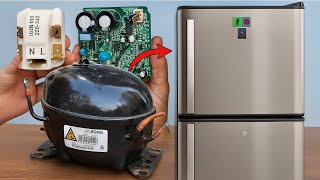
Real DIY Repair Stories
Be the first to share your repair story!
Share Your Repair Story
Your experience helps other homeowners fix their appliances. Tell us how it went!
Can't Fix It Yourself? Find a Local Technician
It's perfectly okay to call a professional. Some repairs require specialized tools, deep teardowns, or dealing with complex systems that are better left to the pros.

Find the Right Part for Your Appliance
Don't guess — search your exact appliance model number at ProsourceParts.com to find the correct OEM compatible replacement part. They offer fast free shipping, guaranteed fit, and thousands of parts in stock.
Your Free Parts Videos
Whether your dishwasher won't drain, your dryer stopped heating, or your fridge isn't cold, we've created simple repair guides for the most common appliance problems homeowners face. Each guide explains what's going wrong, the most likely causes, and which replacement parts fix the issue. When you're ready to order, we link directly to ProsourceParts.com where you can search by model number and get the right part shipped fast.