
Estate EED4400WQ0 High-Limit Thermostat — What Part Fixes This Problem?
Need the replacement part? Search your model number at for guaranteed fit and fast free shipping.
Understanding the Problem
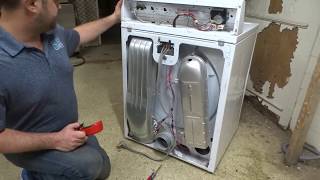
Brief explanation: The "high-limit" part on your Estate EED4400WQ0 dryer is a temperature safety device (thermal cutoff / high-limit thermostat). It opens (cuts power to the heating circuit) if the dryer gets too hot or if there's a heater short to the cabinet. When it fails or trips, the dryer may run with no heat, overheat intermittently, or shut off during a cycle. Step-by-step diagnostic and repair steps: 1) Confirm symptoms: note whether the dryer runs but has no heat, heats briefly then dies, or runs normally then suddenly overheats. Record any error lights or codes. 2) Safety first: Unplug the dryer (or turn off the breaker). If it's a gas dryer, turn off the gas supply. Let the appliance cool completely. 3) Access the component: For most EED-series (electric) dryers the high-limit / thermal cutoff is mounted on or near the heater housing at the back of the cabinet. Remove the dryer’s back panel (or front panel if required) using a screwdriver or nut driver to expose the heating element and thermostat cluster. 4) Visual inspection: Look for burned or melted connectors, scorched housing, accumulated lint, or signs the heating element has contacted the cabinet (element coils touching the metal housing). These are common causes of high-limit failures. 5) Locate the parts: Identify the multi-thermostat cluster — you’ll see the cycling thermostat(s) and one or two safety thermostats/thermal cutoffs (often round or rectangular with two spade terminals). 6) Isolate and test with a multimeter: With the dryer unplugged, disconnect the wires from the high-limit/thermal cutoff. Set your multimeter to continuity or low ohms. At room temperature a high-limit (safety) thermostat or thermal fuse should usually show continuity (closed). If it shows OL/infinite resistance, it is blown and must be replaced. If it shows continuity, it hasn’t failed at room temp — see steps below for further checks. 7) Heat testing (optional, cautious): If a thermostat is suspected to be intermittent, you can warm it gently with a heat gun or hair dryer to see if it opens at temperature while monitoring continuity. Do not overheat or apply flame. 8) Inspect the heating element: If the high-limit is blown, check the heating element for breaks or for coils touching the metal housing — that can create a short to the cabinet and cause overheating and repeated high-limit trips. 9) Check venting and airflow: Remove the vent hose and lint buildup. Restricted venting causes high temperatures and will cause the safety thermostat to trip or thermal fuse to blow. Clean the duct to outside and the dryer’s lint trap and blower housing. 10) Replace the faulty high-limit/thermal cutoff: Remove the old thermostat (note wire locations or take a photo), disconnect spade terminals, unscrew the mounting screw, install the exact replacement part, reconnect wires to the correct terminals, and remount the panel. 11) Reassemble and test: Reattach the back panel, reconnect power (and gas if applicable), run the dryer empty on a heat cycle and monitor. Verify it reaches and maintains normal temperature and no error symptoms recur. 12) Follow-up if it trips again: If a new high-limit part opens shortly after installation, suspect a shorted heating element, bad cycling thermostat, or severe vent restriction. Do not repeatedly replace the safety cutoff without fixing the underlying cause. Safety note: Always disconnect power before working on the dryer. Never bypass a safety thermostat or thermal fuse — doing so is dangerous and can cause fires. If you’re not comfortable with electrical testing, call a qualified appliance tech.
Common Symptoms
Dryer runs but produces no heat, dryer heats briefly then shuts off mid-cycle, dryer overheats and trips, repeated blown thermal cutoffs after reassembly.
Common Causes
- Failed high-limit thermostat / thermal cutoff (open circuit)
- Restricted venting or clogged lint trap causing excessive temperatures
- Heating element shorting to the cabinet or failed cycling thermostat allowing runaway heat
Popular Parts That Fix This Problem
These are the most common replacement parts that fix this problem. When you're ready to order, click below to find the right part at ProsourceParts.com — just search by your appliance model number for a guaranteed fit.

Helpful Repair Tip
Use a multimeter: disconnect the wires, check continuity across the high-limit/thermal cutoff at room temp. Open (no continuity) = replace. Also take a clear photo of wire routing before disconnecting to ensure correct reassembly.
Frequently Asked Questions
What does the high-limit thermostat do and how is it different from the thermal fuse?
The high-limit thermostat (safety thermostat) is a temperature cutoff that opens to stop power to the heating circuit if the dryer overheats. A thermal fuse (one-time fuse) also blows when excessive temperature is reached. Some models have both: a cycling thermostat to regulate normal heat, a high-limit safety thermostat for over-temp protection, and a thermal fuse that must be replaced if blown. Both prevent fires, but a thermal fuse is usually single-use while some safety thermostats are resettable in design by replacing them when open.
Can I temporarily bypass the high-limit thermostat to test the dryer?
No. Bypassing safety thermostats or thermal fuses is dangerous and can create a fire hazard. For testing, you can momentarily test continuity with a multimeter, or temporarily connect power only while monitoring temperature and airflow with extreme caution, but you should never bypass the safety device as a permanent test method. Replace any failed safety device and correct the underlying cause before normal use.
Related How-To Videos
Real DIY Repair Stories
Be the first to share your repair story!
Share Your Repair Story
Your experience helps other homeowners fix their appliances. Tell us how it went!
Can't Fix It Yourself? Find a Local Technician
It's perfectly okay to call a professional. Some repairs require specialized tools, deep teardowns, or dealing with complex systems that are better left to the pros.

Find the Right Part for Your Appliance
Don't guess — search your exact appliance model number at ProsourceParts.com to find the correct OEM compatible replacement part. They offer fast free shipping, guaranteed fit, and thousands of parts in stock.
Your Free Parts Videos
Whether your dishwasher won't drain, your dryer stopped heating, or your fridge isn't cold, we've created simple repair guides for the most common appliance problems homeowners face. Each guide explains what's going wrong, the most likely causes, and which replacement parts fix the issue. When you're ready to order, we link directly to ProsourceParts.com where you can search by model number and get the right part shipped fast.