
Defrost Timer Replacement – What Part Fixes This Problem?
Need the replacement part? Search your model number at for guaranteed fit and fast free shipping.
Understanding the Problem
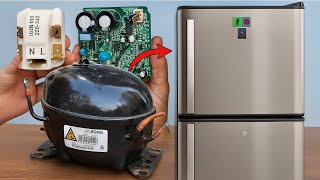
What the defrost timer does and why it fails: The defrost timer (mechanical) or defrost control board (electronic) cycles your refrigerator between cooling and defrost modes so frost on the evaporator is periodically melted. If the timer/control fails the defrost heater may never run and the evaporator will freeze up, causing the fridge to run continuously, lose cooling, or have poor freezer performance. Step-by-step diagnostic & replacement procedure: 1. Confirm the symptom: look for heavy frost/ice build-up on the evaporator (inside back panel of freezer) and/or a constantly-running compressor and warm refrigerator compartments. 2. Locate model tag and parts: note fridge make/model/serial (inside fridge or on door frame). Decide whether your unit uses a mechanical defrost timer (often behind the kickplate or in the control housing) or an electronic defrost control board (usually behind the rear or top cover or inside control console). 3. Safety first: unplug the refrigerator or shut off its circuit breaker before any testing or disassembly. 4. Force a manual defrost (mechanical timer): if you have a mechanical timer (small round box with a shaft), advance it slowly with a screwdriver until it clicks into defrost — compressor should stop and the defrost heater should get power. If it forces to defrost and heater works, timer may be faulty if it won’t advance on its own. 5. Check the defrost heater: with power off, remove freezer back panel to access evaporator. Use a multimeter set to continuity/ohms to measure the heater’s resistance. Typical heater readings are low ohms (a few to several tens of ohms depending on design). Open/infinite resistance = heater is bad. 6. Check the defrost thermostat/thermistor: this is a small clip-on device on the evaporator. At cold temperatures it should show continuity if it’s a thermostat; if open when cold, it’s failed. Some systems use a thermistor — compare resistance to expected spec or check the control board for error codes. 7. Test the timer or control board: for a mechanical timer, test that it has continuity between common and the defrost output when advanced manually. For an electronic control board, test outputs during a forced defrost (some boards have a push-button or menu to force defrost; otherwise refer to tech sheet). If the board doesn’t send 120VAC (or the board’s expected voltage) to the heater while in defrost and the heater and thermostat are good, replace the control board/timer. 8. Replace the part: - Mechanical defrost timer replacement: unplug power, remove kickplate or control box cover, take a photo of wiring, pull connectors (or unscrew the timer), note orientation and shaft position, install new timer, reconnect wires, restore power and observe a complete cycle or force defrost to verify operation. - Electronic defrost control board replacement: unplug, remove access panel, label and disconnect all connectors, unscrew board, transfer any sensors or mounts if necessary, install new board, reconnect exactly as removed, replace covers and power up. Some boards require a reset or a short learning period. 9. Verify repair: allow the refrigerator to run and monitor for 24–48 hours to ensure frost does not reappear and normal cooling cycles resume. If the problem persists, re-check wiring, sensor ground, and temperature settings or call a tech for further diagnosis (sealed system problems are separate). Safety note: always disconnect power before working on electrical components. If you must probe live circuits to confirm voltage, use insulated tools, keep one hand behind your back, and consider calling a professional if you’re not comfortable. Do not tamper with refrigerant lines or sealed system components.
Common Symptoms
Heavy frost on the evaporator, freezer and/or fridge warming, compressor runs continuously, intermittent cooling, or unit not cycling into defrost.
Common Causes
- Failed mechanical defrost timer (won't advance or switch to defrost)
- Failed electronic defrost control board (no output to heater)
- Open/failed defrost heater (broken element)
- Faulty defrost thermostat/thermistor or bad wiring/connector causing heater not to receive power
Popular Parts That Fix This Problem
These are the most common replacement parts that fix this problem. When you're ready to order, click below to find the right part at ProsourceParts.com — just search by your appliance model number for a guaranteed fit.

Helpful Repair Tip
Force a manual defrost: advance a mechanical timer into defrost — if the heater warms and compressor stops, the heater & thermostat are OK and the timer/board is the likely culprit.
Frequently Asked Questions
How do I know if my defrost timer is bad or something else?
Check three things: the heater, the defrost thermostat, and the timer/board. If the heater shows open/infinite resistance, replace the heater. If the heater and thermostat are good but the timer never switches to defrost (or the electronic board never powers the heater), the timer or control board is the problem. For mechanical timers you can advance it manually to force defrost; if nothing happens, the timer is likely at fault.
Can I bypass the defrost timer or control board to get my fridge working?
Temporarily forcing a manual defrost (with a mechanical timer) can melt ice to restore immediate cooling, but bypassing the timer or board permanently is not recommended — you’ll risk uncontrolled cycles and damage. Replace the failed timer or control board and any failed heater/thermostat for a safe, lasting repair.
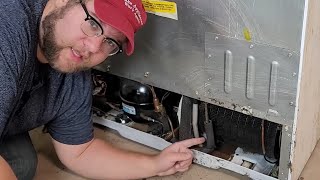
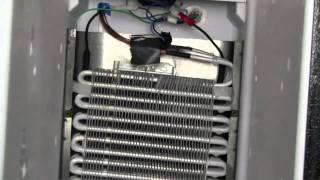
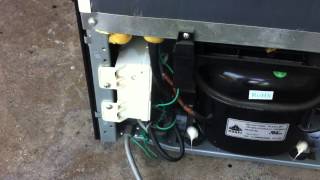
Related How-To Videos
Real DIY Repair Stories
Be the first to share your repair story!
Share Your Repair Story
Your experience helps other homeowners fix their appliances. Tell us how it went!
Can't Fix It Yourself? Find a Local Technician
It's perfectly okay to call a professional. Some repairs require specialized tools, deep teardowns, or dealing with complex systems that are better left to the pros.

Find the Right Part for Your Appliance
Don't guess — search your exact appliance model number at ProsourceParts.com to find the correct OEM compatible replacement part. They offer fast free shipping, guaranteed fit, and thousands of parts in stock.
Your Free Parts Videos
Whether your dishwasher won't drain, your dryer stopped heating, or your fridge isn't cold, we've created simple repair guides for the most common appliance problems homeowners face. Each guide explains what's going wrong, the most likely causes, and which replacement parts fix the issue. When you're ready to order, we link directly to ProsourceParts.com where you can search by model number and get the right part shipped fast.