
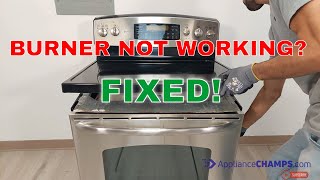
Burner Not Working on Electric Stove – What Part Fixes This Problem?
Need the replacement part? Search your model number at for guaranteed fit and fast free shipping.
Understanding the Problem
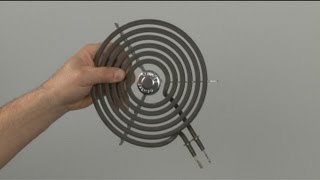
Brief explanation: An electric stove burner that won't heat can be caused by a bad surface element (coil or radiant element), a failed infinite switch (the control behind the knob), a bad receptacle/terminal block, loose wiring, or a control board problem on glass‑top models. The repair path is to isolate whether the element itself is dead, the switch that powers it is bad, or the wiring/connector is the issue. Step-by-step diagnostic & repair steps: 1) Safety first: disconnect power at the breaker (or unplug range). Confirm power is off with a non-contact voltage tester or multimeter at the outlet/terminal block. 2) Identify cooktop type: coil (drop-in) element or glass-ceramic radiant element. Coil elements are removable and easier to test; radiant elements sit under the smooth top and are removed from below. 3) Visual inspection: with power off, remove knobs and drip pans (coils) or lift the cooktop (smooth top) and inspect element, wiring, and terminal block for burned connectors, melted plastic, or broken wires. 4) Simple swap test (coil element only): If you have a coil element that you suspect is bad, swap it with another working burner of the same size. If the swapped element heats in the other socket, the original element is bad. If it still doesn't heat, the problem is the switch/socket/wiring. 5) Continuity test on element: Disconnect the element lead(s) and use a multimeter set to ohms. A good coil or radiant element should show continuity (often a few ohms to a few dozen ohms depending on the element). An open (OL) reading means the element is burned out and should be replaced. 6) Test the infinite switch (control behind knob): With element disconnected, turn the burner knob and check for continuity on the switch terminals per wiring diagram (or test for continuity between line input and element output across settings). If the switch doesn't make connection when turned, replace the infinite switch. 7) Inspect and test the receptacle/terminal block: For coil elements, the element plugs into a small metal receptacle. These can fail or burn. Check for continuity through the receptacle and for visible damage. Replace the receptacle if scorched, loose, or if continuity is intermittent. 8) Check supply and wiring: If multiple burners are dead or intermittent, check the house breaker, terminal block where power enters the range, and the main wiring. Look for loose nuts on the terminal block and burned insulation. 9) For glass-top radiant elements: If the element tests good but the burner doesn't heat, the problem can be the surface element assembly or the infinite switch module on the control board. Some models have a separate touch/control board; follow the model wiring diagram and test the element circuit for voltage when the control is on. 10) Replace the failed part: Replace the element, receptacle, or infinite switch as diagnosed (see replacement steps below). After replacement, reassemble and restore power, then test the burner. Basic replacement steps (coil element): A) Power off at the breaker. B) Remove drip pan and lift the coil element slightly, pull out from the receptacle. C) Pull the old element straight out of the socket and push the new one into place. D) Replace drip pan and knob, restore power, and test. Basic replacement steps (infinite switch for coil or radiant): A) Power off and verify. B) Remove knobs and control panel trim to access the switch mounting screws. C) Label and disconnect wires from the switch (take a photo first). D) Remove the mounting screws, install new switch, reconnect wires, reassemble, and test. Basic replacement steps (radiant element under glass top): A) Power off, remove back panel trim, and lift the cooktop per service manual instructions. B) Disconnect element wiring and remove mounting screws/clips holding element. C) Replace element assembly, reconnect wires exactly as before, lower cooktop, secure, and test. Safety note: Always disconnect power before testing or touching wiring or heating elements. If you're not comfortable working with high-voltage appliances, hire a qualified technician. Beware of sharp edges under the cooktop and fragile glass surfaces.
Common Symptoms
Burner doesn't heat at all; heats intermittently; only works on some settings; glows but doesn't heat well; visible burning or melting at the terminal/receptacle.
Common Causes
- Open (failed) surface element (coil or radiant)
- Faulty infinite switch (the temperature control behind the knob)
- Burned or loose burner receptacle/terminal block
- Wiring fault or loose connection at the main terminal block
- Control board or module failure on glass-top ranges
Popular Parts That Fix This Problem
These are the most common replacement parts that fix this problem. When you're ready to order, click below to find the right part at ProsourceParts.com — just search by your appliance model number for a guaranteed fit.

Helpful Repair Tip
For coil burners, swap the suspect coil with a known good coil from a different burner — if the coil works in the other socket the switch/receptacle is likely the problem; if it still fails the coil is bad.
Frequently Asked Questions
Can I replace a burner element myself?
Yes — coil elements are DIY-friendly: turn off power, pull the coil out of the receptacle, and plug in a new coil. Infinite switches and radiant elements require basic electrical skills: power off at the breaker, label wires or take a photo before disconnecting, and follow the model's service manual. If unsure, call a professional.
My coil element glows but doesn’t heat well — what does that mean?
If it glows but fails to reach expected heat, the element may have partial internal damage (high resistance) or the infinite switch may be failing and not delivering full voltage. Test the element for continuity/resistance and check voltage at the element terminal with the control set to high (power on, be careful). Replace the element if resistance is abnormal; replace the switch if voltage is absent or inconsistent.
Related How-To Videos
Real DIY Repair Stories
Be the first to share your repair story!
Share Your Repair Story
Your experience helps other homeowners fix their appliances. Tell us how it went!
Can't Fix It Yourself? Find a Local Technician
It's perfectly okay to call a professional. Some repairs require specialized tools, deep teardowns, or dealing with complex systems that are better left to the pros.

Find the Right Part for Your Appliance
Don't guess — search your exact appliance model number at ProsourceParts.com to find the correct OEM compatible replacement part. They offer fast free shipping, guaranteed fit, and thousands of parts in stock.
Your Free Parts Videos
Whether your dishwasher won't drain, your dryer stopped heating, or your fridge isn't cold, we've created simple repair guides for the most common appliance problems homeowners face. Each guide explains what's going wrong, the most likely causes, and which replacement parts fix the issue. When you're ready to order, we link directly to ProsourceParts.com where you can search by model number and get the right part shipped fast.