
ATW4475VQ Top-Load Washer — Common Problems, Causes & Parts
Need the replacement part? Search your model number at for guaranteed fit and fast free shipping.
Understanding the Problem
The ATW4475VQ is a top-load washing machine that commonly experiences a set of predictable mechanical and electrical issues over time. Typical problems include the washer not starting or powering on, failing to agitate or spin, not draining, leaking, and unusual noises during the wash or spin cycles. These failures are usually caused by a small number of components that wear out or become clogged: lid switches/door locks, drain pumps and hoses, water inlet valves, drive components (belts or couplings), and control/electrical parts. Diagnosing the cause begins with observing the symptom and performing a few simple checks: is there power to the machine, do lights or display codes appear, does the tub try to spin, and is water being emptied? For example, a washer that fills but won't agitate often points to a lid switch or motor/drive issue, while a washer that fills and spins but won't drain likely has a faulty pump or a clogged drain hose. Electrical faults and intermittent problems often point to the user interface/control board or to wiring/connector issues.
Common Symptoms
No power or no lights; washer fills but won't agitate or spin; washer won't drain or leaves water in the tub; loud grinding or squealing during spin; water leaks from the front or bottom.
Common Causes
- Failed lid switch or lid lock assembly preventing the washer from starting agitation or spin.
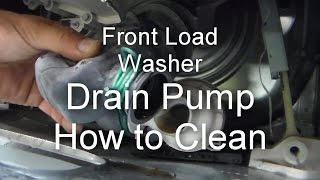
- Clogged or failed drain pump or blocked drain hose preventing water from draining.
- Worn drive components (belt, coupling, clutch) or motor failure reducing or stopping agitation/spin.
Popular Parts That Fix This Problem
These are the most common replacement parts that fix this problem. When you're ready to order, click below to find the right part at ProsourceParts.com — just search by your appliance model number for a guaranteed fit.
Helpful Repair Tip
Start with the simplest checks: verify the washer has power at the outlet, inspect the drain hose and pump filter for clogs, and test the lid switch for continuity (or see if the machine will run with the lid held closed). That quickly rules out common, inexpensive failures before moving to motors or control boards.
Frequently Asked Questions
How can I tell if the lid switch is the problem?
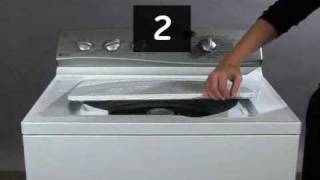
If the washer won't start agitation or spin and there are no error codes and the motor sounds normal, the lid switch is a common culprit. Try this: open the lid and start a spin/agitate cycle — the washer should not run. Close the lid (or gently press the lid switch if accessible) and try again; if it starts, the switch or its actuator is likely faulty. For a definitive test, disconnect power and use a multimeter to check the switch for continuity when it is activated. Always verify part compatibility before ordering a replacement.
The washer fills but won't drain — can I fix it myself?
Often yes. First unplug the washer and check the drain hose for kinks or clogs and inspect the pump inlet (many models have an access panel or removable filter) for lint, coins, or debris. If the pump is blocked, clearing the obstruction can restore function. If the pump motor doesn't run when a drain cycle is selected (and wiring is intact), the pump may need to be replaced. If you’re not comfortable with accessing the pump or testing electrical components, contact a qualified appliance technician.
Related How-To Videos
Real DIY Repair Stories
Be the first to share your repair story!
Share Your Repair Story
Your experience helps other homeowners fix their appliances. Tell us how it went!
Can't Fix It Yourself? Find a Local Technician
It's perfectly okay to call a professional. Some repairs require specialized tools, deep teardowns, or dealing with complex systems that are better left to the pros.
Find the Right Part for Your Appliance
Don't guess — search your exact appliance model number at ProsourceParts.com to find the correct OEM compatible replacement part. They offer fast free shipping, guaranteed fit, and thousands of parts in stock.
Your Free Parts Videos
Whether your dishwasher won't drain, your dryer stopped heating, or your fridge isn't cold, we've created simple repair guides for the most common appliance problems homeowners face. Each guide explains what's going wrong, the most likely causes, and which replacement parts fix the issue. When you're ready to order, we link directly to ProsourceParts.com where you can search by model number and get the right part shipped fast.