
Amana Dryer Troubleshooting — How to Diagnose and Fix Common Problems
Need the replacement part? Search your model number at for guaranteed fit and fast free shipping.
Understanding the Problem
This guide covers the most common problems on Amana dryers — no heat, dryer won’t start or tumble, long dry times, and unusual noises — and gives practical, step-by-step diagnostic and repair instructions. Follow the numbered checks below in order; many dryer problems have simple fixes (venting, power, or a single safety fuse), and you can often replace parts yourself with basic tools. 1) Safety first - Unplug the dryer (electric) or shut off power at the breaker. For gas dryers, turn off the gas supply and unplug the dryer. Wear gloves and eye protection. 2) If the dryer won’t start at all - Check power: For electric dryers, verify the circuit breaker hasn't tripped and the dryer is plugged in. For gas dryers, confirm the plug and breaker. Use a multimeter at the outlet if comfortable. - Door switch: Press the door switch manually; if the dryer starts, the switch is bad. Test with a multimeter for continuity when the door is closed. - Start switch/timer: If the motor doesn't hum or start, test the start switch and timer/control board for continuity. - Thermal fuse: A blown thermal fuse (a one-time safety device) will cause no-start or no-heat. Locate and test the thermal fuse with a multimeter for continuity; replace if open. 3) If the dryer runs but does not tumble - Belt: Remove the front panel or access the drum and inspect the drive belt. If the belt is broken or loose, replace it. - Motor or idler pulley: If belt is intact but slips, check the idler pulley and motor shaft for wear. Listen for a humming motor with no spin—motor may be bad. - Drum rollers/glides: Worn rollers or slides can seize and prevent tumble; spin drum by hand to feel rough spots. 4) If the dryer runs but won’t heat (electric) - Power to the heating element: Electric dryers need 240V (two hot legs). If one hot leg is missing, the motor will run but no heat. Check the wall outlet voltage. - Thermal fuse and high-limit thermostat: Test thermal fuse and thermostats for continuity; replace any open devices. - Heating element: Inspect the heating element for visible breaks and test for continuity. Replace if open or shorted to the housing. - Cycling thermostat / control board: If element gets power but cycles incorrectly, test thermostats and control board outputs. 5) If the dryer runs but won’t heat (gas) - Igniter: On start the igniter should glow until gas valves open. If it doesn't glow or glows very briefly, replace the igniter. - Gas valves (solenoid coils): If the igniter glows but gas doesn't flow, check the gas valve coils; they may need replacement. - Thermal fuse and flame sensor/thermostat: Test as above and replace any open or faulty safety devices. - Gas supply: Confirm the household gas supply is on and other gas appliances operate. 6) If drying takes too long or dryer overheats - Venting: Clean lint from the lint trap, lint housing, ductwork, and outside vent. Restricted airflow is the top cause of long dry times and overheating. - Drum seal/roller wear: Worn seals or rollers let air escape or reduce tumbling efficiency. - Thermostats: Faulty cycling thermostats can allow overheating or poor heat control. 7) If dryer is noisy or vibrates excessively - Drum rollers, bearings, idler pulley, and support glides: Inspect for wear, noise, or wobble. Replace worn rollers or bearings. - Foreign objects: Check between drum and cabinet for coins, screws, or debris. - Motor bearings: A loud growling motor often indicates motor failure; replace motor if bearings are bad. 8) Typical repair/replacement steps (example: replace thermal fuse) - Unplug dryer and access the back or front panel to locate the thermal fuse on the blower housing. - Remove the wires (note positions or take a photo), remove the mounting screw, and pull out the fuse. - Install the new fuse, reconnect wires, reassemble panels, restore power, and test. 9) Example: replace drum belt - Unplug dryer and lay a towel to protect the top. Remove the top/front panel (model-dependent). Release tension on the idler and remove the old belt. - Loop the new belt around the drum and route it over the motor pulley and idler so the ribbed side contacts pulleys correctly. Reinstall panels and test run. 10) Example: replace igniter (gas dryer) - Unplug and shut off gas. Remove front panel to access burner assembly. Disconnect igniter wires, remove mounting screw(s), and carefully replace with OEM igniter. - Reassemble, restore gas and power, and test—igniter should glow then gas should ignite. Final safety note: Always disconnect power and (for gas dryers) the gas supply before working. If you’re not comfortable testing gas components or working on gas lines, call a qualified technician. Use OEM parts or high-quality replacements matched to your model number.
Common Symptoms
Dryer won’t start, dryer runs but no heat, dryer tumbles but is noisy, long drying times, dryer overheats, burning smell or tripping breaker.
Common Causes
- Blown thermal fuse or open safety thermostat
- Clogged lint screen or venting causing poor airflow
- Failed heating element (electric) or igniter/gas valve coils (gas)
- Broken drum belt, worn rollers, or failed motor
- Power supply issue or tripped breaker / single hot leg missing (electric)
Popular Parts That Fix This Problem
These are the most common replacement parts that fix this problem. When you're ready to order, click below to find the right part at ProsourceParts.com — just search by your appliance model number for a guaranteed fit.
Helpful Repair Tip
Confirm a failed heating-related part by testing for continuity with a multimeter (thermal fuse, element, thermostats). For gas dryers, visually check the igniter: it should glow before the gas valves open — no glow usually means a bad igniter.
Frequently Asked Questions
How do I find my Amana dryer model number?
Open the dryer door and look around the door opening or on the door frame — most Amana dryers have a sticker or metal tag with the model and serial number. Some models have the tag on the back or the underside of the top panel. Use that model number when ordering parts.
Can I replace heating parts or gas components myself?
You can replace many electrical parts (thermal fuse, heating element, belt, rollers) if you follow safety steps: unplug the dryer and use a multimeter to verify parts. For gas components (igniter, gas valves), you can do the mechanical replacements, but always shut off the gas and test for leaks when finished. If you’re not comfortable working with gas or electrical testing, hire a licensed technician.
Related How-To Videos
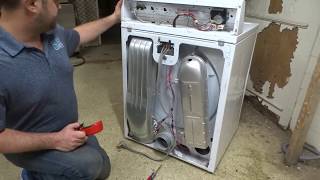
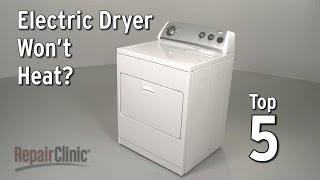
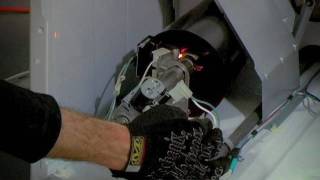
Real DIY Repair Stories
Be the first to share your repair story!
Share Your Repair Story
Your experience helps other homeowners fix their appliances. Tell us how it went!
Can't Fix It Yourself? Find a Local Technician
It's perfectly okay to call a professional. Some repairs require specialized tools, deep teardowns, or dealing with complex systems that are better left to the pros.
Find the Right Part for Your Appliance
Don't guess — search your exact appliance model number at ProsourceParts.com to find the correct OEM compatible replacement part. They offer fast free shipping, guaranteed fit, and thousands of parts in stock.
Your Free Parts Videos
Whether your dishwasher won't drain, your dryer stopped heating, or your fridge isn't cold, we've created simple repair guides for the most common appliance problems homeowners face. Each guide explains what's going wrong, the most likely causes, and which replacement parts fix the issue. When you're ready to order, we link directly to ProsourceParts.com where you can search by model number and get the right part shipped fast.